

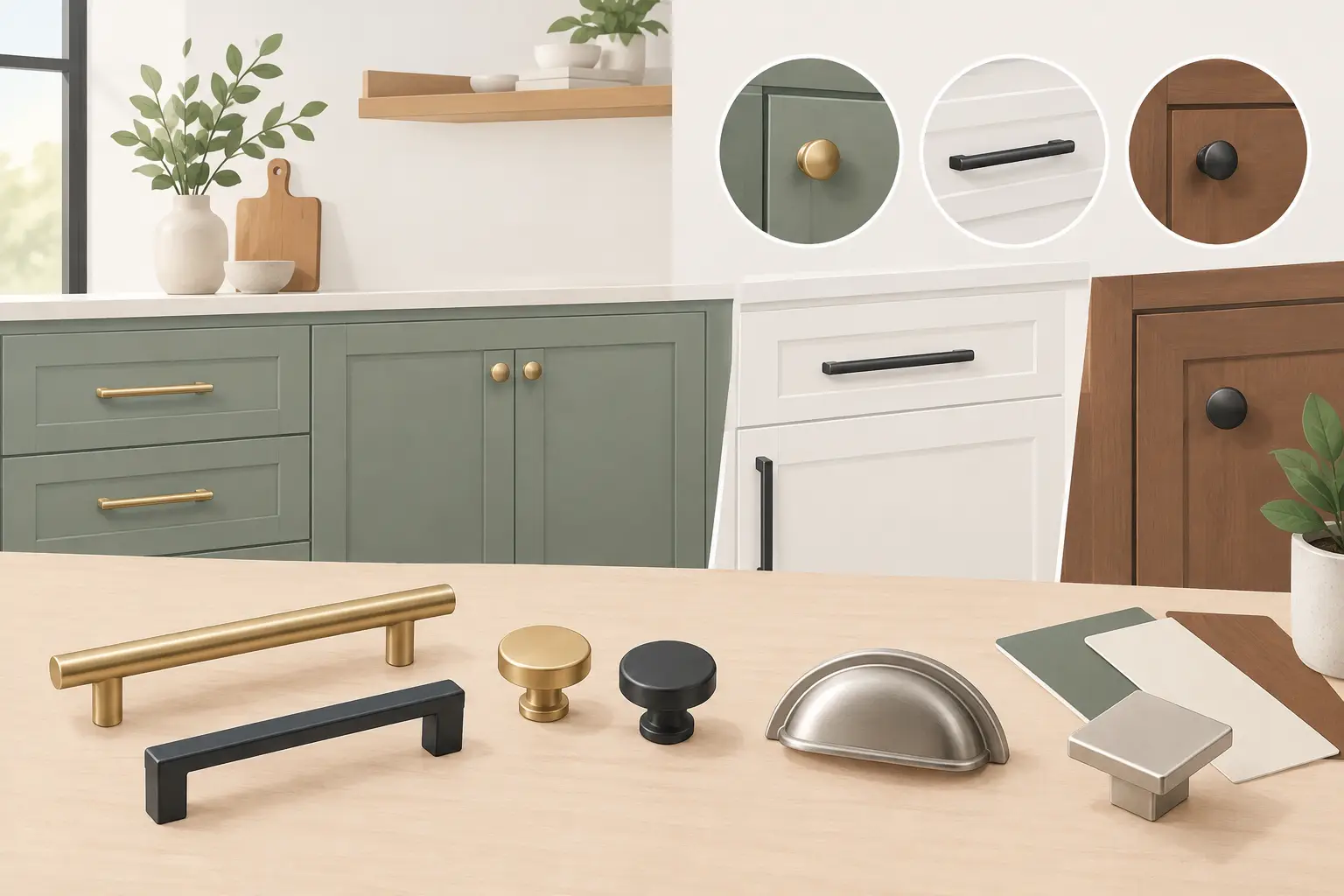
Cabinet hardware may be small, but it is one of the first details people notice in a finished kitchen or bathroom. Knowing how to choose cabinet hardware helps you avoid a common remodeling frustration: cabinets that look beautiful on their own but feel slightly off once the knobs and pulls are installed. The right hardware brings the room together, feels comfortable every day, and gives your cabinetry a finished, intentional look.
Unlike paint or decor, hardware has to work as hard as it looks. It is touched constantly, exposed to moisture and cleaning products, and installed in a location that can be difficult to change later. A little planning before you order can save time, extra holes in cabinet doors, and unnecessary replacement costs.
Start With the Style of Your Cabinets
Cabinet hardware should support the overall style of the room rather than compete with it. Begin with your cabinet door profile, then consider the countertop, faucet, lighting, and flooring. A simple choice often looks the most polished because it gives the larger features in the room room to stand out.
Shaker cabinets are flexible and work with many hardware styles. Bar pulls in brushed nickel, matte black, champagne bronze, or stainless steel can give Shaker doors a clean, current look. Cup pulls and round knobs add a more traditional or farmhouse feel, especially on painted white, gray, navy, or green cabinetry.
For raised-panel or more decorative cabinet doors, consider knobs with some dimension or pulls with softened edges. Ornate hardware can work well in a traditional bathroom, but it can look busy when paired with detailed doors, patterned countertops, and decorative lighting. In that situation, a simpler pull is usually the better choice.
Flat-panel, slab, and modern cabinet doors often look best with streamlined hardware. Slim bar pulls, edge pulls, and long linear handles reinforce clean lines. If you prefer a minimalist kitchen, integrated finger pulls or touch-latch doors may be an option, though they require more frequent cleaning because fingerprints tend to show.
Choose Knobs, Pulls, or Both
There is no rule that says every cabinet needs the same type of hardware. In fact, using knobs and pulls together is one of the easiest ways to create a balanced, functional layout.
Knobs are generally a good fit for cabinet doors. They are compact, affordable, and easy to grip. They also work especially well on upper cabinets, smaller bathroom vanities, and doors with a more traditional style.
Pulls are often the practical choice for drawers because they allow a fuller grip, particularly on wide drawers loaded with pots, dishes, or pantry items. They are also helpful for homeowners who want easier access for aging in place or have limited hand strength. Long pulls can make a wide drawer feel proportionate, while a small knob can look undersized and be harder to use.
A common approach is to use knobs on cabinet doors and pulls on drawers. Another option is to use pulls throughout the kitchen for a more contemporary appearance. Both can look right. What matters most is consistency in finish, shape, and visual weight.
How to Choose Cabinet Hardware Sizes
Hardware sizing is where many homeowners get stuck, and for good reason. A pull that looks right in your hand can still look too short or too long on the cabinet front. Proportion matters more than following one strict formula.
For standard cabinet drawers, pulls that are roughly one-third of the drawer width are a reliable starting point. A 24-inch drawer, for example, often looks balanced with an 8-inch pull. Wider drawers may use longer pulls, or two matching pulls placed evenly across the drawer front. Double pulls are especially practical on deep, heavy drawers.
For tall pantry doors, appliance panels, and large cabinet doors, longer pulls usually look better and are easier to operate. Smaller doors can handle shorter pulls or knobs without appearing crowded. If your kitchen includes drawers of several widths, you can use different pull lengths as long as the design and finish remain consistent.
Always check the center-to-center measurement before buying pulls. This is the distance between the two screw holes, not the total length of the pull. If you are replacing existing hardware and want to avoid filling and drilling holes, match that measurement exactly.
The most dependable way to judge scale is to order a few samples. Hold them against your actual cabinet doors and drawers in the room, not just under showroom lighting. Painter’s tape can help you test placement before drilling, and a cabinet hardware template helps keep every handle level and evenly spaced.
Placement Makes a Noticeable Difference
Hardware placement affects both appearance and daily comfort. On upper cabinet doors, knobs and pulls are typically placed near the lower corner, while lower cabinet door hardware is placed near the upper corner. For Shaker cabinets, hardware is often centered on the stile, the vertical or horizontal frame piece around the recessed panel.
Drawer pulls are usually centered horizontally and vertically. If you are using two pulls on a wide drawer, keep them evenly spaced and align them with the cabinet door hardware whenever possible. Small inconsistencies may not be obvious during installation, but they tend to stand out once the whole room is complete.
Pick a Finish That Works With the Room
The finish is where cabinet hardware can either quietly coordinate or become a defining design feature. You do not have to match every metal in the room perfectly. Matching can look cohesive, but a carefully chosen mix of metals can add warmth and depth.
Brushed nickel remains popular because it is versatile, familiar, and forgiving with water spots and fingerprints. Chrome has a brighter, cooler look and pairs naturally with many bathroom faucets. Matte black creates contrast on light cabinets and works well in modern, transitional, farmhouse, and industrial-inspired spaces.
Warm finishes such as champagne bronze, brushed gold, and aged brass can make white, cream, wood-tone, or deep green cabinets feel more elevated. These finishes work best when they connect with another feature in the room, such as a faucet, light fixture, mirror frame, or accent metal. You do not need an exact match, but the tones should feel compatible. A warm brass pull next to a cool, blue-toned chrome faucet can look accidental rather than layered.
Think about maintenance, too. Polished finishes show fingerprints and water marks more readily. Matte black can show dust or dried water spots in busy kitchens. Brushed and satin finishes are often easier for active households because they hide everyday marks better.
Consider Comfort and Quality Before You Commit
A hardware finish is only part of the decision. The piece should feel substantial, smooth, and comfortable in your hand. Sharp corners, narrow openings, and rough edges become more noticeable after you have opened the same drawer dozens of times.
Solid metal hardware is generally more durable than lightweight hollow pieces, especially for frequently used drawers. Look for a finish that is designed to resist tarnish, corrosion, and wear. This matters in Tampa Bay homes, where kitchen humidity, bathroom moisture, and salt air in coastal areas can be tougher on lower-quality finishes.
Also leave enough clearance behind each pull for your fingers. A beautiful handle that is difficult to grab is not a practical choice. Test it with your normal grip, and consider who uses the room most often. Children, older adults, and anyone with arthritis may benefit from larger, easy-to-hold pulls rather than small decorative knobs.
Coordinate Hardware With the Full Renovation Plan
Cabinet hardware is one of the last decisions many homeowners make, but it should be considered before cabinet installation begins. Your door style, countertop edge, backsplash, faucet, appliances, lighting, and wall color all influence the best choice.
For example, black pulls can tie together black-framed pendants and a dark faucet, while soft brass hardware can warm up a kitchen with white cabinets and light quartz counters. In a bathroom, hardware can echo the vanity light or mirror without making every metal surface identical.
If you are renovating more than one room, you can repeat a finish throughout the home without using the exact same handle everywhere. A kitchen may need long bar pulls for function, while a bathroom vanity may look better with smaller pulls or knobs in the same finish. That creates continuity while allowing each room to fit its own scale.
At The Cabinets Store, homeowners can compare cabinet styles, finishes, countertops, and hardware choices as part of a larger kitchen or bathroom plan. Seeing these materials together before ordering makes it much easier to make a confident decision.
Before drilling the final holes, place a sample on several cabinet fronts and step back. The right hardware should feel natural in the room, comfortable in your hand, and worth seeing every time you walk into your kitchen or bath.







Leave A Comment
You must be logged in to post a comment.