
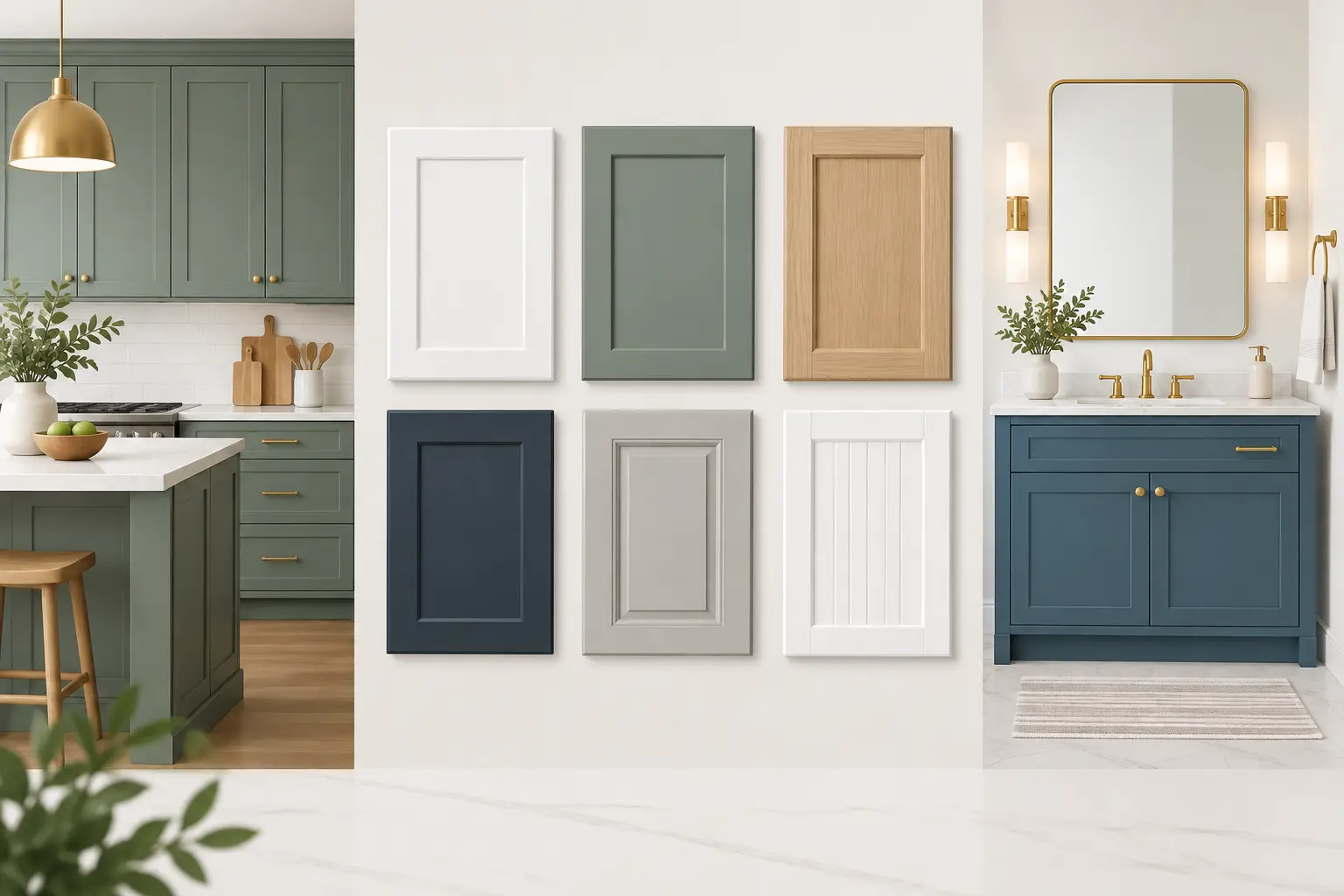
Cabinet doors do more than cover storage. They set the visual tone for the entire room, influence how easy the space is to clean, and can make a modest renovation feel thoughtfully designed. This cabinet door style guide will help you narrow the choices based on your home, budget, and the look you want to live with for years.
For Tampa Bay homeowners, the best choice is rarely about following one trend. A door style should fit your home’s architecture, work with your countertops and flooring, and suit the amount of maintenance you are comfortable taking on. The right cabinet door can make a compact bathroom feel calmer or give a dated kitchen the fresh, finished character it has been missing.
Cabinet Door Style Guide: Choose the Right Foundation
Before comparing profiles, start with the overall direction of your room. Cabinet doors may cover most of the wall space in a kitchen, so they should generally lead the design rather than compete with every other finish.
A clean-lined door gives you more freedom with a patterned backsplash, dramatic countertop, or statement hardware. A more detailed door can bring warmth and character to a simple room, especially when paired with quiet counters and a restrained backsplash. Neither approach is automatically better. It depends on whether you want the cabinetry to blend into the background or become a key design feature.
Also consider how long you plan to stay in the home. If resale is a priority, a versatile style in a broadly appealing color is usually a safer investment. If this is your long-term home, it may be worth choosing details that feel more personal, provided they still work with the house itself.
Shaker Doors: The Flexible Favorite
Shaker cabinet doors have a flat center panel framed by simple rails and stiles. Their clean, balanced profile works with many looks, from coastal and transitional to farmhouse and contemporary.
This versatility is why Shaker remains a popular choice for kitchen remodels. White or soft gray Shaker cabinets can feel bright and classic. A natural wood finish adds warmth. Navy, green, or black Shaker doors can create a more tailored, modern look without feeling overly stark.
The trade-off is that the recessed panel and inside corners collect more dust and cooking residue than a flat slab door. It is not difficult to maintain, but it does require occasional attention with a soft cloth. Shaker is also widely available across price points, making it a smart option for homeowners who want an upgraded appearance while keeping their cabinet budget in check.
Slab Doors: Clean Lines, Less Maintenance
Slab doors, sometimes called flat-panel doors, have a smooth, unframed face. They are a natural fit for modern, minimalist, and contemporary kitchens, but they can also work beautifully in a warm transitional home when finished in wood grain or a soft painted color.
Because there are no grooves or raised details, slab doors are among the easiest styles to wipe clean. That practical benefit matters in active family kitchens and bathrooms where splashes, fingerprints, and everyday messes are part of life.
A slab door does need careful finishing and installation. On a large bank of cabinets, uneven gaps or mismatched tones are easier to notice because the surface is so simple. Hardware also has a stronger visual role. Long pulls can push the look modern, while small knobs or discreet edge pulls can keep it more understated.
Raised-Panel Doors: Traditional Detail and Depth
Raised-panel doors feature a center panel that sits higher than the surrounding frame. They add shadow lines, dimension, and a more formal appearance than Shaker or slab doors. This style often suits traditional homes, classic kitchens, and bathroom vanities where you want the cabinetry to feel substantial.
Warm whites, creams, stained wood tones, and antique-inspired hardware all pair naturally with raised-panel doors. They can be especially effective in homes with crown molding, decorative trim, or more traditional furniture.
The consideration is visual weight. In a small kitchen with limited natural light, heavily detailed doors can make the room feel busier. A lighter paint color, simple countertop, and open sightlines can keep the space from feeling closed in. Raised-panel doors also have more edges to clean, so they are best for homeowners who enjoy the look enough to accept a little extra upkeep.
Recessed-Panel and Craftsman Doors: Quiet Character
Recessed-panel doors are related to Shaker styling but can include wider frames, square details, or a more substantial profile. Craftsman-inspired doors often fall into this family. They offer a tailored, architectural look that feels less minimal than slab doors and less formal than raised-panel styles.
These doors are a strong option for bungalow, Craftsman, cottage, and transitional homes. They also work well when you want cabinetry with character but do not want the room to feel themed or overly ornate. Medium wood finishes and muted painted colors tend to highlight the construction details nicely.
Cabinet Door Style Guide: Match Style to Room Size
The same door can look very different in a large open kitchen than it does in a small hall bath. Scale should be part of the decision.
In smaller rooms, simple doors often create the most breathing room. Slab doors are especially effective, while narrow-frame Shaker doors can offer detail without making the walls feel crowded. Lighter colors, vertical storage, and a consistent door style across the vanity or kitchen perimeter help the room read as larger and more organized.
Larger kitchens have more flexibility. You might use Shaker doors on the perimeter and a contrasting slab or glass-front door on an island or beverage area. The mix should be intentional, though. Limiting the room to one main profile and one accent style usually looks more polished than combining several decorative door shapes.
Glass-front cabinet doors deserve special consideration. They can break up a long run of solid cabinetry and create a place to display glassware or favorite serving pieces. However, they also reveal what is inside. They work best when the cabinet contents can stay reasonably organized. Frosted or textured glass offers a middle ground, adding lightness without putting every shelf on display.
Don’t Forget Color, Finish, and Hardware
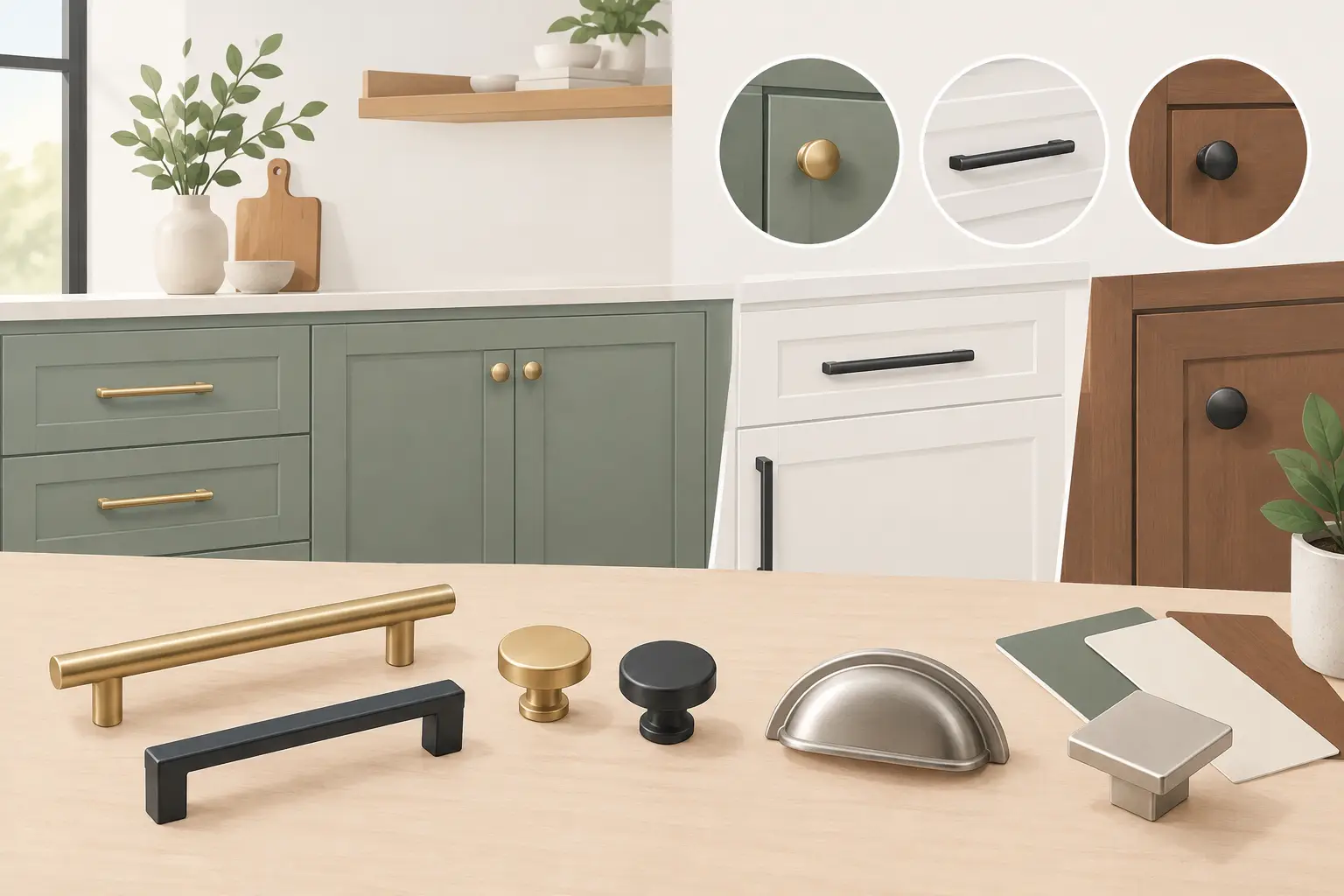
Door style is only one part of the final result. Color and finish can make the same profile feel completely different. A white Shaker kitchen may look crisp and coastal with brushed nickel hardware, warm and inviting with brass, or more dramatic with matte black pulls.
Painted finishes deliver a smooth, consistent color and are popular for both kitchens and baths. Wood finishes add grain, variation, and natural warmth. They are particularly useful when a room needs texture without a busy backsplash or countertop. Thermofoil and laminate options can provide a durable, budget-conscious route to a sleek slab-door look, though the available colors and edge details vary by cabinet line.
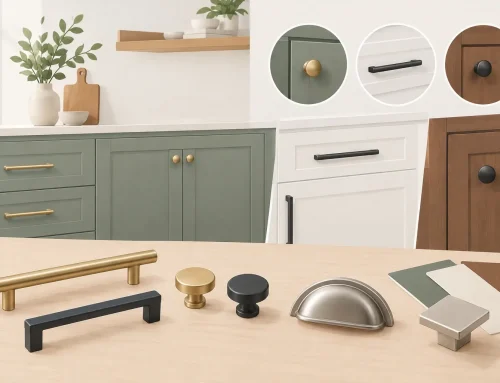
Hardware should support the door rather than overpower it. Detailed knobs and cup pulls can reinforce traditional or farmhouse styling. Straight bar pulls complement Shaker and slab doors. If you prefer a more contemporary appearance, longer pulls, integrated pulls, or touch-latch doors can reduce visual clutter.
Choose for Daily Life, Not Just the Showroom
A showroom door can look beautiful under bright lighting, but your choice should also make sense for your household. A busy kitchen may benefit from easy-clean slab fronts or a forgiving medium-tone finish. A formal entertaining space may be the right place for glass inserts or raised-panel detail. In bathrooms, consider how the style will look beside mirrors, tile, lighting, and the smaller scale of the vanity.
Material matters, too. Solid wood doors offer natural beauty but can expand and contract with changing humidity. Engineered wood and MDF doors often provide a very smooth painted finish and can be a practical choice for painted cabinetry. The best option depends on the cabinet construction, finish, budget, and the conditions in the room.
At The Cabinets Store, homeowners can compare door styles, colors, cabinet lines, and functional accessories in one place before committing to a design. Seeing samples beside countertop and flooring selections often answers questions that are difficult to settle from a photo alone.
Bring a few inspiration photos to your design conversation, but also bring a clear picture of how you use the room. The cabinet door that feels right is the one that supports your daily routine, fits your home naturally, and still makes you happy when you walk in each morning.