
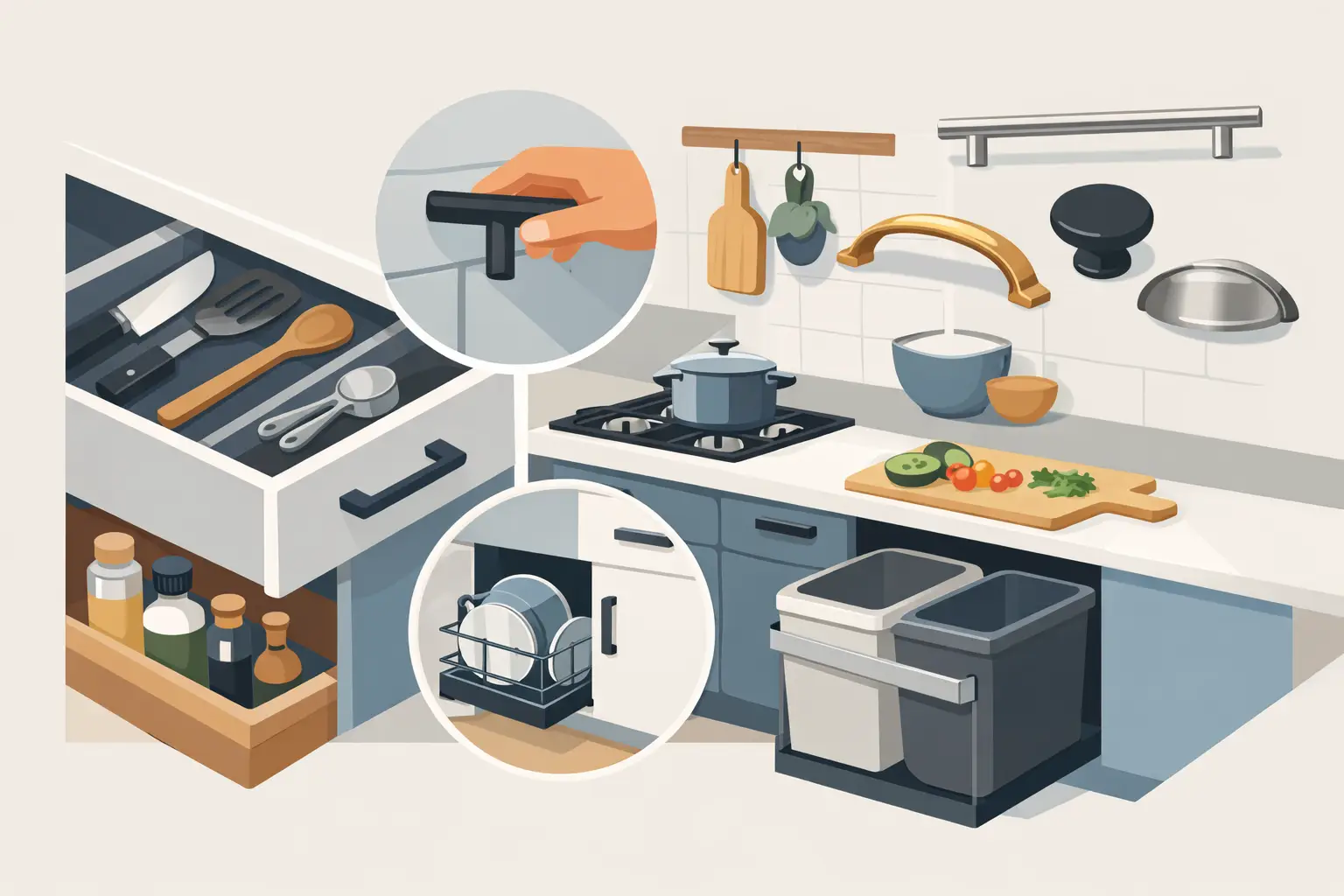
A new cabinet door can change the look of a room, but cabinet hardware is what you touch every day. The right knob, pull, hinge, or drawer slide makes a kitchen feel finished and makes a bathroom easier to use. The wrong choice can leave beautiful new cabinets feeling awkward, noisy, hard to open, or dated sooner than expected.
For Tampa Bay homeowners planning a kitchen or bath update, hardware deserves attention early in the design process. It affects cabinet door style, drawer sizes, countertop overhangs, accessibility, and the overall budget. Fortunately, choosing well does not require chasing every trend. It requires matching the hardware to how your household actually uses the space.
Start With How You Use the Room
Before choosing a finish or shape, think about the daily routine in the room. A kitchen used for family meals, homework, entertaining, and grocery storage needs dependable hardware that can handle constant use. A guest bathroom may call for something simpler, while a primary bath should feel comfortable during rushed mornings and relaxing evenings alike.
Drawer pulls are usually the practical choice for wide, heavy drawers. They give you a larger grip and distribute the force of opening the drawer. Knobs can work beautifully on lighter cabinet doors, especially on shaker, raised-panel, or more traditional styles. Many homeowners choose a combination: knobs on doors and pulls on drawers. It is a classic approach that creates visual order without making every cabinet look identical.
If you have young children, aging family members, or limited hand strength in the home, prioritize easy-to-grasp pulls over small knobs. Bar pulls, curved pulls, and D-shaped handles are often more comfortable than narrow or sharply edged styles. A showroom consultation is especially helpful here because hardware can look one way online and feel completely different in your hand.
Choosing Cabinet Hardware Sizes That Look Intentional
Size is one of the most overlooked details in a cabinet project. Hardware that is too small can disappear on a large drawer front. Hardware that is too long can compete with a cabinet door’s rails, panels, or decorative details.
There is no single measurement that works for every kitchen. The best proportion depends on the width of the drawer, the cabinet style, and how clean or decorative you want the finished room to feel. As a general visual starting point, wider drawers often benefit from longer pulls, while standard cabinet doors can carry a smaller pull or knob comfortably.
For extra-wide drawers, you may choose one long pull or two matching pulls. Two pulls can be a smart functional choice on deep drawers loaded with pots, dishes, or pantry items because they make the drawer easier to open from either side. One long pull creates a more streamlined look, particularly in contemporary kitchens.
The most reliable way to decide is to test the proportions before every hole is drilled. Place sample hardware against a cabinet door or drawer front, step back several feet, and check it from the angles you use when entering the room. Tape can help hold a sample in position temporarily. Small decisions at this stage prevent frustrating patch-and-repair work later.
Placement matters as much as size
On upper cabinet doors, hardware is typically placed near the lower corner. On base cabinet doors, it is usually positioned near the upper corner. Drawers generally receive centered pulls, but a design may call for a slightly different placement depending on the door style and surrounding cabinetry.
Consistency matters. Even high-quality pulls can look careless when placement varies from cabinet to cabinet. Using a hardware template helps keep holes level and evenly spaced. If your renovation includes installation services, confirm the selected hardware and placement plan before doors and drawer fronts are drilled.
Match the Finish to Your Whole Design, Not Just the Cabinets
Hardware finishes help tie together cabinets, faucets, lighting, appliances, and other details. That does not mean every metal in the room must match exactly. It means the combination should look deliberate.
Brushed nickel remains a reliable option because it works with many cabinet colors, cleans easily, and does not show fingerprints as readily as polished finishes. Matte black offers contrast against white, light gray, natural wood, and many warm neutral cabinet finishes. It can give a simple shaker kitchen a stronger, more tailored look.
Warm metal finishes, including brushed brass and champagne bronze, can add softness to white, cream, green, blue, or stained wood cabinetry. They work especially well when homeowners want warmth without the formality of a traditional kitchen. Polished chrome can still be an excellent fit for bathrooms, particularly where a brighter, cleaner look complements chrome plumbing fixtures.
The trade-off is maintenance and longevity of appearance. Highly polished finishes show water spots and fingerprints more easily. Trend-driven colors may be exciting, but should be selected carefully if you want the room to feel current for many years. A durable, versatile finish often gives a better return than choosing hardware solely because it is popular this season.
Do Not Overlook Hinges and Drawer Slides
Visible knobs and pulls get the attention, but hidden cabinet hardware does much of the real work. Hinges determine how doors open, align, and close. Drawer slides determine whether storage feels smooth and sturdy or flimsy and frustrating.
Soft-close hinges are a popular upgrade for good reason. They gently pull cabinet doors closed, reducing noise and protecting the cabinet box and door over time. Soft-close drawer slides offer the same benefit for drawers, especially in active kitchens. They are useful in bathrooms, too, where drawers often hold heavier items such as hair tools, toiletries, and cleaning supplies.
For a remodel, consider full-extension drawer slides wherever possible. Unlike basic slides that leave the back portion of a drawer harder to reach, full-extension slides allow the drawer to open farther. That makes it easier to see and use utensils, cooking tools, spices, and pantry items without digging through the front.
Weight capacity matters on larger drawers. A drawer designed for stacks of plates, cast-iron cookware, or pull-out trash bins needs slides that are rated for that load. Saving a little on internal hardware can become expensive if drawers sag, bind, or fail under normal use.
Coordinate Hardware With Cabinet Style
The cabinet door style should guide the hardware selection. Shaker cabinets are flexible and can work with round knobs, classic cup pulls, simple bar pulls, or more decorative handles. Their clean lines support both traditional and modern choices.
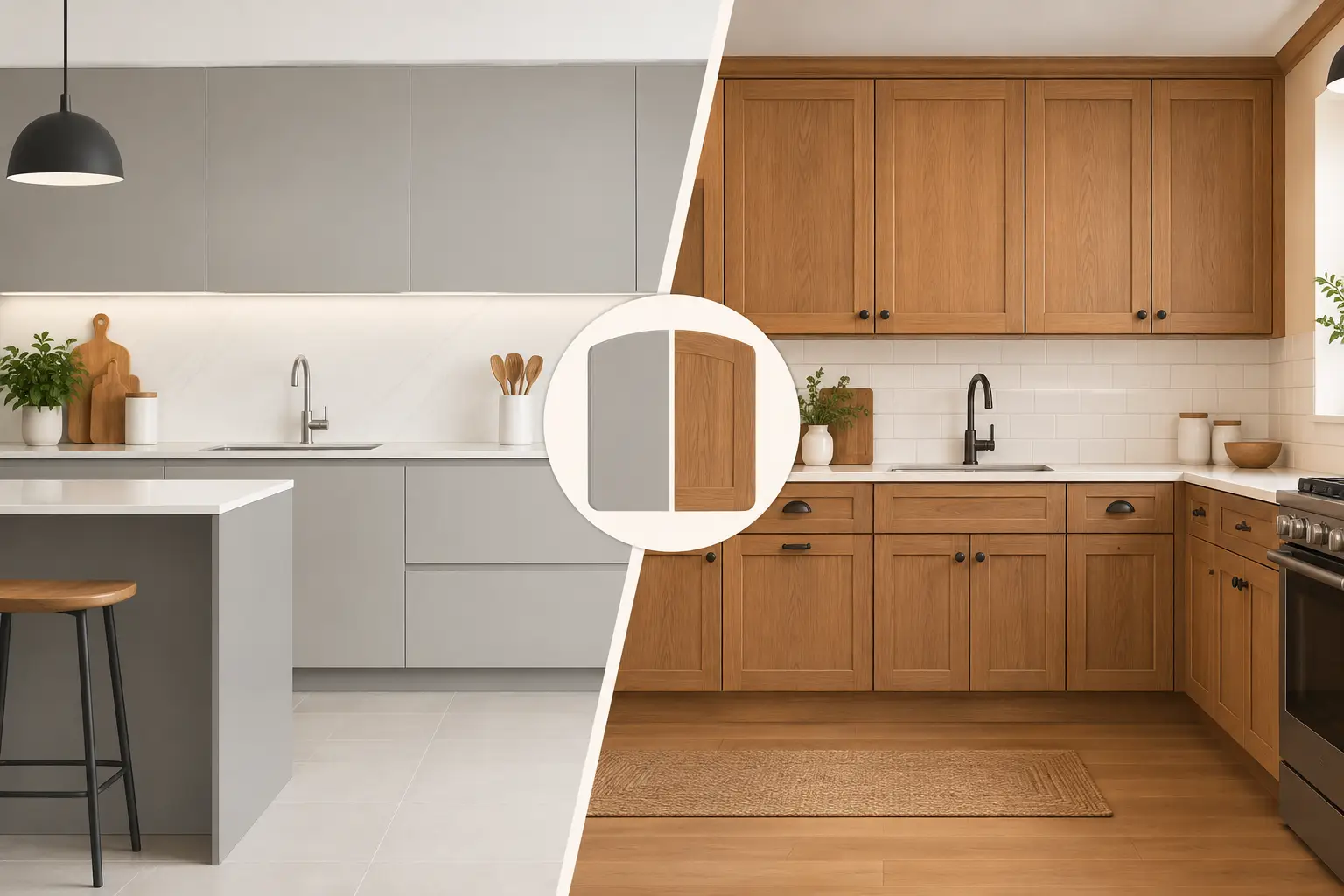
Flat-panel and slab cabinet doors generally look best with simple, streamlined hardware. Long edge pulls, slim bar pulls, or integrated pulls can reinforce a contemporary look. More ornate hardware may feel out of place unless the rest of the design has a strong transitional or eclectic direction.
Raised-panel or more detailed cabinet doors often pair well with knobs and pulls that have gentle curves, subtle texture, or traditional profiles. The goal is not to make the hardware compete with the door. It should complement the cabinet details without making the room feel overly busy.
In a small kitchen or bathroom, simple hardware can help the room feel calmer. In a larger space, slightly more substantial pulls may provide the visual weight the cabinetry needs. Cabinet color also changes the equation. Dark hardware creates contrast on light cabinets, while brushed nickel or warm brass may offer a softer transition.
Budget for Hardware Early
Hardware costs can add up quickly because a kitchen may need dozens of knobs, pulls, hinges, and slides. It is easy to focus on the price of one pull and forget the total quantity. Count every door, drawer, pantry, vanity, and specialty storage cabinet before finalizing a selection.
This is one area where mixing price points can make sense. You might choose a more distinctive pull for highly visible drawers and use a coordinating, simpler knob on standard doors. What matters is that the pieces look like they belong together and perform well where they are used most.
Avoid selecting hardware at the very end of the project if you can. Cabinet hardware affects drilling, installation timing, and even how you feel about the finished space. At The Cabinets Store, design support can help homeowners compare cabinet styles, functional upgrades, and finishing details as part of a complete kitchen or bath plan.
A well-planned room should not merely photograph well on installation day. When the cabinet doors close quietly, the drawers open smoothly, and every handle feels natural in your hand, the space becomes easier to enjoy for years to come.