
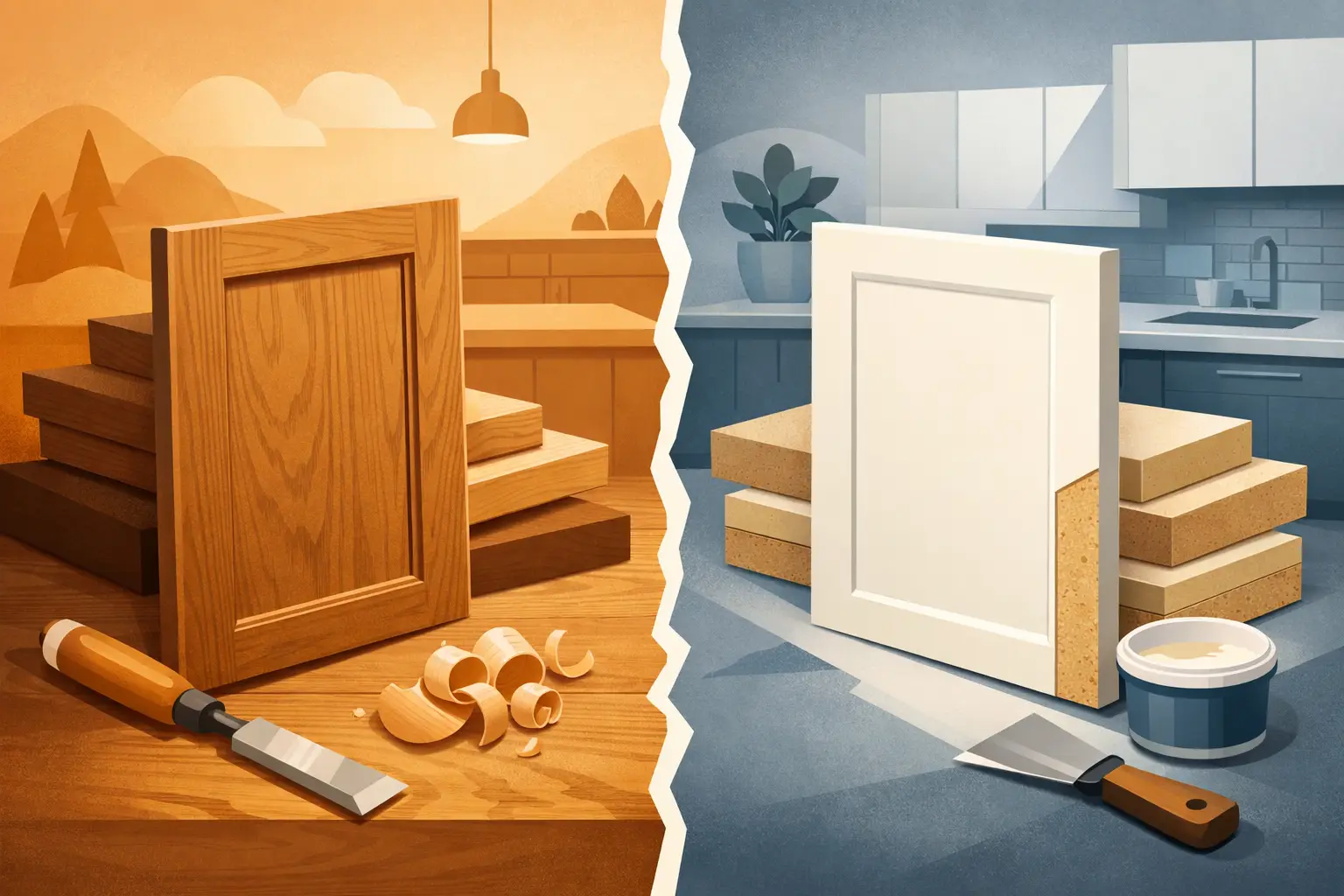
The solid wood versus MDF cabinets decision often comes down to more than appearance. A door that looks beautiful in a showroom still has to perform through busy mornings, cooking steam, Florida humidity, and years of opening and closing. The right choice depends on where the material is used, the finish you want, your budget, and how you use your kitchen or bathroom.
For many Tampa Bay homeowners, the best cabinet plan is not strictly one material or the other. It is a thoughtfully built cabinet line that uses the right material in the right place, paired with a layout and style that make the room easier to live in.
First, Know What You Are Comparing
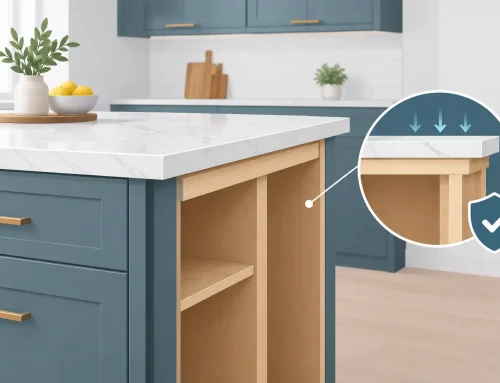
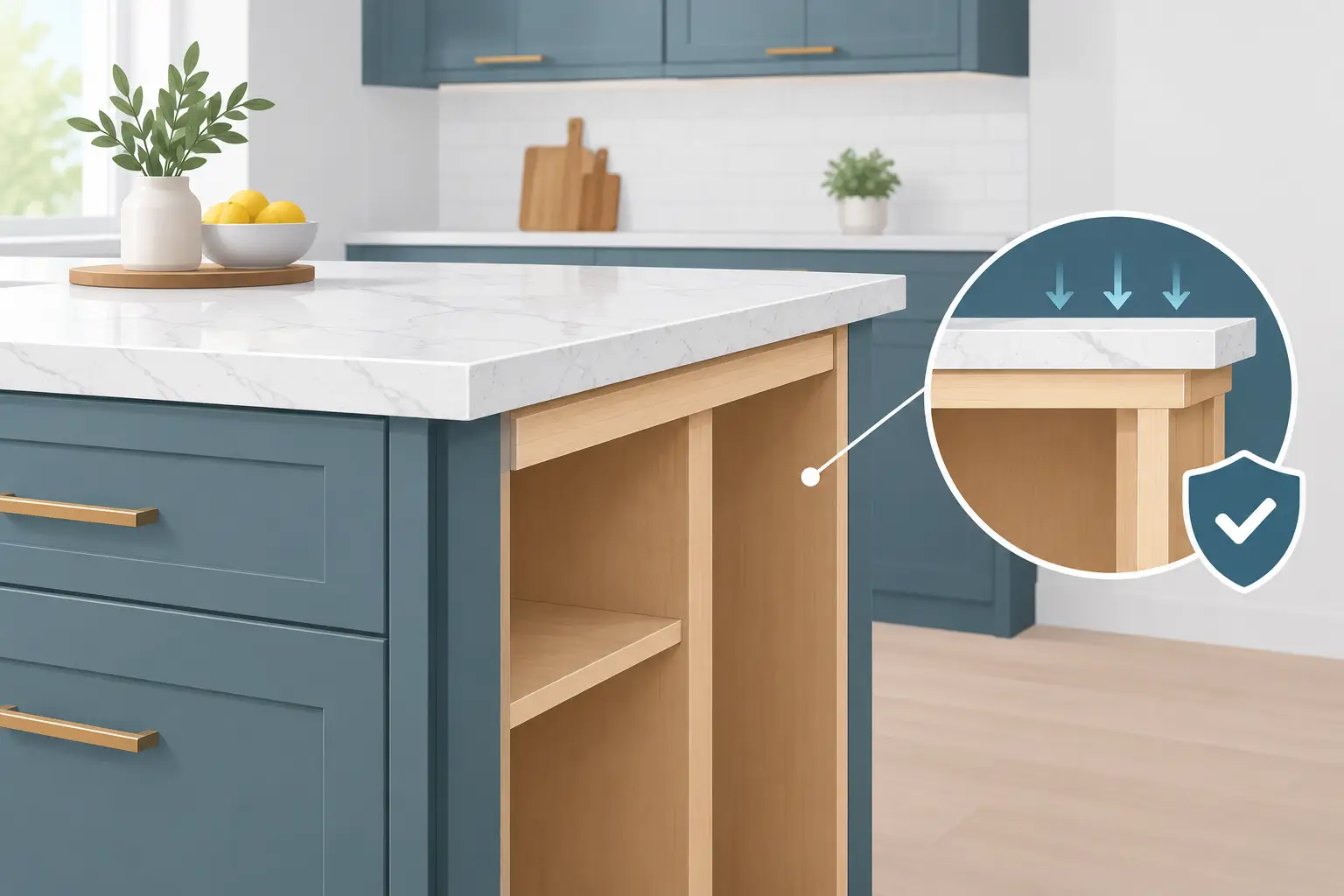
“Solid wood cabinets” can mean different things. In many cabinet lines, it refers to solid wood doors, drawer fronts, and face frames. The cabinet box itself may be furniture board, plywood, or another engineered material. A fully solid-wood cabinet box is less common and is not automatically the better choice for every project.
MDF stands for medium-density fiberboard. It is an engineered wood product made from fine wood fibers combined with resin and compressed into dense, smooth panels. MDF is commonly used for painted cabinet doors, decorative end panels, and some cabinet components.
Neither term alone tells the full story. Cabinet construction, door style, hardware, finish quality, installation, and care all affect how cabinetry looks and performs over time. Comparing one cabinet door material to another without asking about the box construction is an easy way to miss the bigger picture.
Solid Wood Versus MDF Cabinets: The Main Differences
Appearance and door style
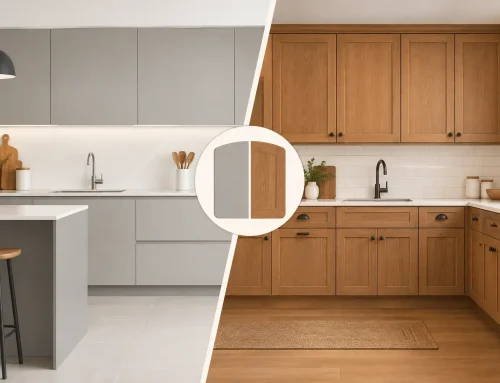
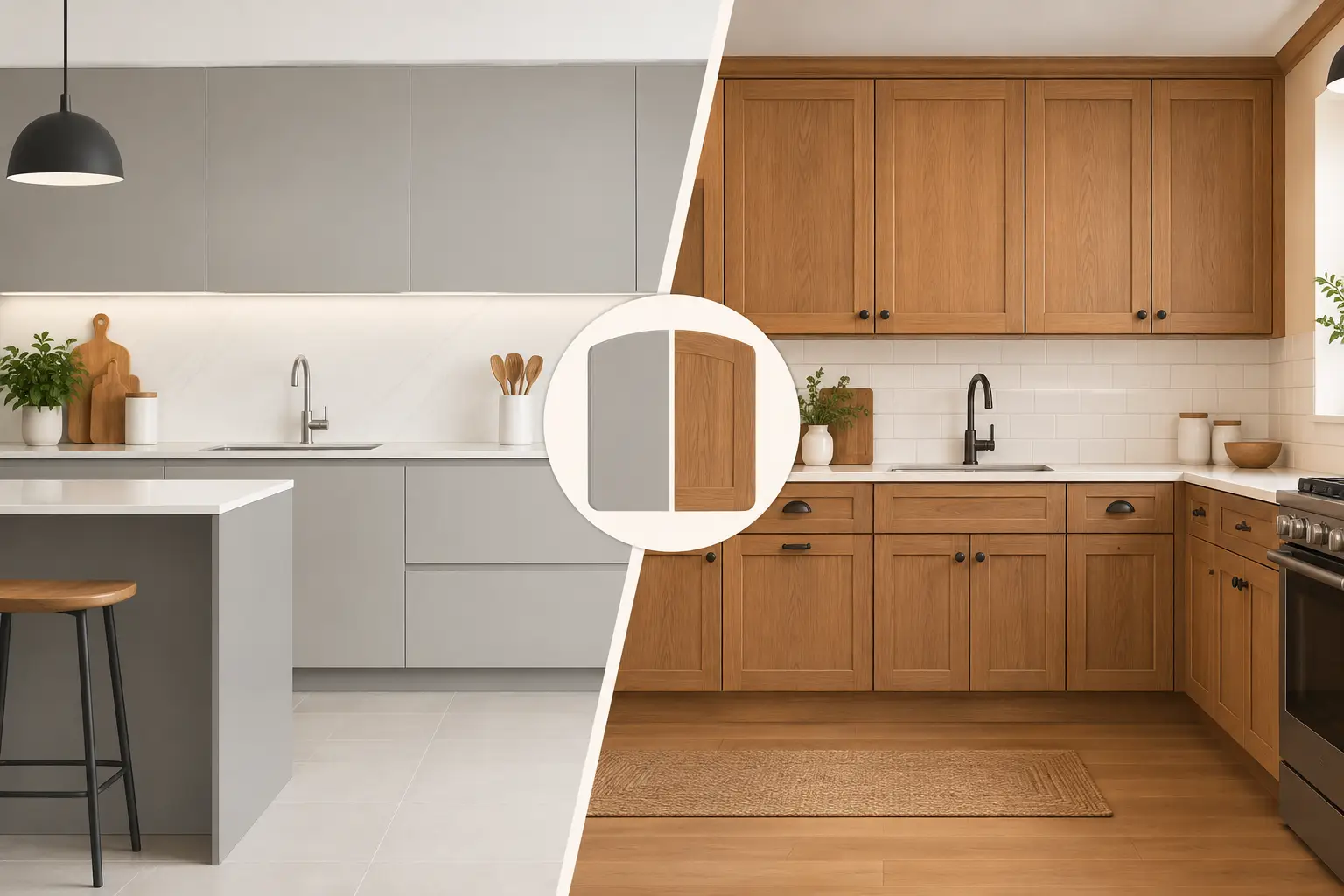
Solid wood has natural grain, color variation, and character. It is an excellent choice when you want a stained finish that highlights species such as maple, oak, birch, cherry, or hickory. Wood also brings warmth to a kitchen, whether the design is traditional, transitional, coastal, or modern farmhouse.
Because wood is a natural material, it expands and contracts as humidity changes. That movement is normal, but it can occasionally show as small finish changes at door joints or panel edges. In a climate like Greater Tampa Bay, where outdoor humidity is high for much of the year, maintaining steady indoor conditions helps protect any wood product in the home.
MDF has no visible grain, which makes it a strong match for painted cabinetry. Its smooth, uniform surface creates a clean painted finish without grain texture showing through. It also allows for detailed routed profiles, making it popular for shaker doors, raised panels, and more decorative painted styles.
If your goal is a crisp white, soft gray, deep navy, or custom painted cabinet color, MDF doors are often a practical and attractive choice. If your vision centers on a natural wood stain, solid wood is usually the clear favorite.
Moisture and humidity
No cabinet material should be left exposed to standing water. A leaking sink, dishwasher connection, refrigerator line, or toilet can damage solid wood, MDF, plywood, and particleboard products. The finish, edge treatment, and prompt repair of leaks matter just as much as the core material.
MDF can swell if water penetrates an unfinished edge or damaged finish. It is not the best material for areas that may regularly get wet, such as an unprotected vanity base near a persistent plumbing leak. However, a properly finished MDF door in a climate-controlled kitchen or bathroom can perform very well.
Solid wood handles ordinary indoor humidity changes differently, not necessarily perfectly. It is less likely to swell in the same way as unprotected MDF, but it can move, warp, split, or develop visible joint lines when exposed to major moisture swings or poor conditions. In either case, good ventilation in bathrooms and timely leak repairs are part of protecting your investment.
Durability and everyday use
Solid wood is strong and can be repaired, refinished, or touched up in some situations. Small dents and scratches may be less noticeable on wood-grain finishes, especially when the cabinetry has natural variation. That repairability can be appealing for a long-term home or a household that expects plenty of activity in the kitchen.
MDF is dense, stable, and resistant to the seasonal movement associated with natural wood. Its edges can be more vulnerable to impact than solid wood, particularly if an edge is chipped. Still, a quality MDF cabinet door with a durable painted finish and solid hinges can stand up well to normal family use.
The drawer boxes, hinges, slides, and cabinet box construction often influence daily durability more than door material. Soft-close hardware is convenient, but its quality varies. A cabinet that feels solid, opens smoothly, and stays properly aligned is the result of the whole construction package.
Cost and value
MDF is generally more budget-friendly than solid wood, particularly for painted door styles. That can free up room in the remodel budget for better storage accessories, a larger pantry, upgraded countertops, new flooring, or professional installation.
Solid wood typically costs more because it is a natural material that requires more selection, milling, and finishing. The added expense can make sense when a stained wood look is central to the design or when homeowners value the distinctive character of real wood.
Value is not the same as choosing the lowest price. A well-designed MDF cabinet package may offer better day-to-day function than a higher-priced wood option with limited storage or poor layout planning. The most satisfying remodels balance material preference with practical priorities.
Where Each Material Makes the Most Sense
A painted kitchen is often an ideal setting for MDF doors. The material supports a smooth finish and consistent color across a large run of cabinets. This is especially helpful for shaker cabinets, which remain a favorite for homeowners who want a style that feels current without chasing a short-lived trend.
Solid wood is especially compelling for stained doors, natural finishes, and spaces where grain is part of the design. A warm wood island paired with painted perimeter cabinets can also create contrast without committing the full project budget to solid wood doors.
For bathrooms, consider the room’s ventilation and how likely the vanity is to encounter water. A busy hall bath used by children has different demands than a lightly used powder room. A quality finish, a well-installed countertop and sink, and a functioning exhaust fan protect the vanity as much as the door material does.
It is also common to combine materials. For example, a cabinet line may use solid wood face frames and doors with plywood boxes, or MDF doors for painted sections with wood doors on a stained island. This is not cutting corners when it is intentional. It is a way to match the construction to the look and budget of the project.
Questions to Ask Before You Choose
Instead of asking only, “Is it solid wood or MDF?” ask how the doors are constructed, what the cabinet boxes are made of, and what finish system is used. Ask to see a door sample in the color you are considering. Painted samples can reveal whether the finish looks smooth and even, while stained samples show the wood grain and variation you can expect.
You should also consider the cabinet style. A flat-panel modern door may look equally at home in MDF or wood depending on the finish. A detailed painted profile may benefit from MDF’s smooth machining, while a rustic stain calls for the authenticity of wood grain.
Finally, think about your larger project goals. Are you renovating to improve storage, preparing to sell, creating a more accessible kitchen, or building the kitchen you plan to enjoy for the next 15 years? The answer may change where you want to invest. A trusted design consultation can help you compare actual door samples and cabinet specifications instead of making a decision based on labels alone.
Choose for the Room You Want to Live In
Solid wood and MDF both have a place in quality cabinetry. Wood offers natural beauty and stain-friendly character. MDF offers an exceptionally smooth painted surface, consistent performance, and meaningful budget flexibility. The better choice is the one that supports your preferred finish, handles the demands of the room, and leaves space in the budget for the details that make your renovation work better every day.
Before finalizing cabinetry, bring your inspiration photos, measurements, and wish list to a showroom conversation. Seeing door samples beside countertop and flooring options can turn a material question into a clear plan for a kitchen or bathroom that feels right for your home.