
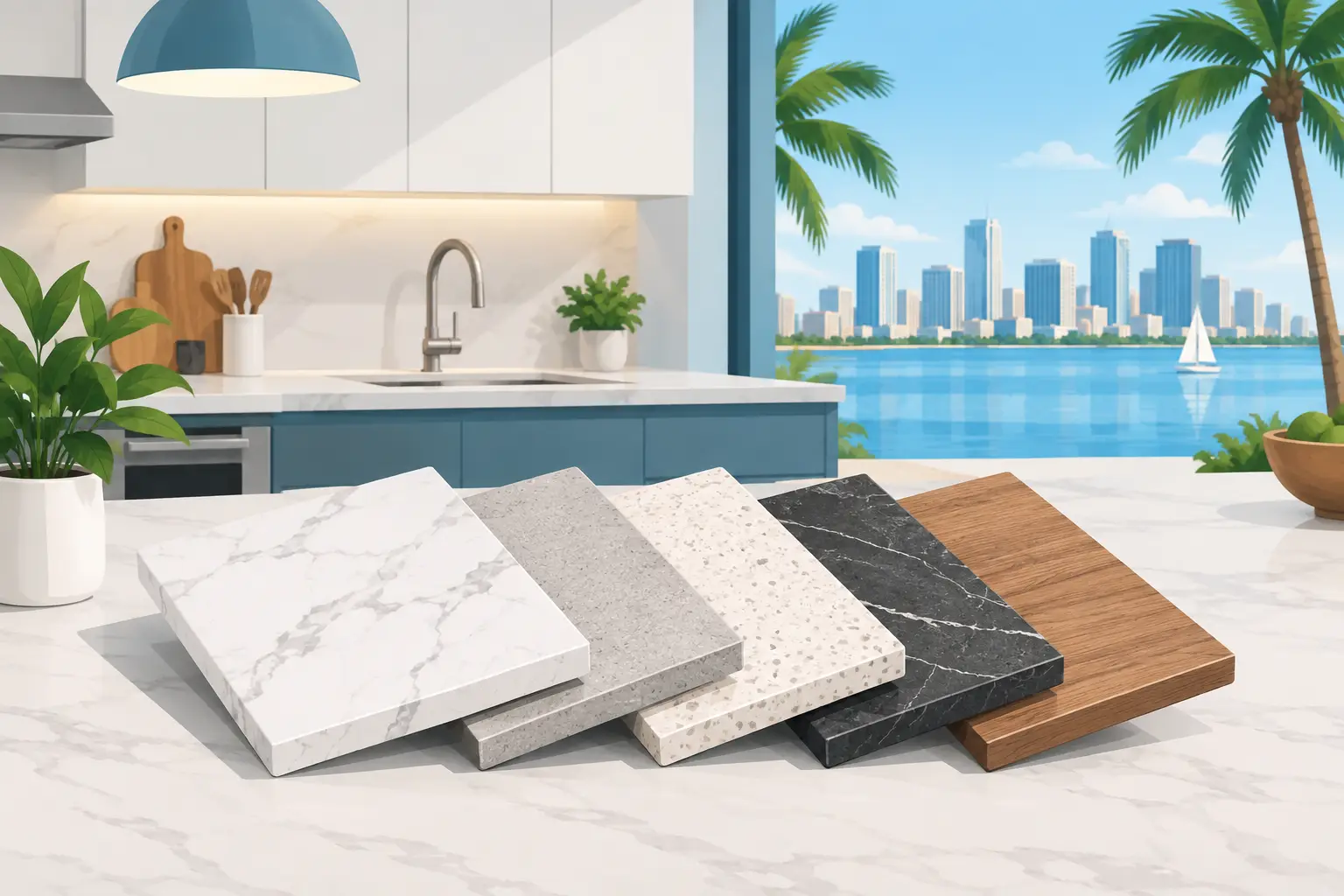
A countertop can make a kitchen feel finished, but it also has to survive coffee rings, weeknight cooking, school projects, and the occasional dropped pan. This countertop selection guide is designed to help Tampa Bay homeowners choose with confidence – not just based on a small showroom sample or a photo online.
The right surface is rarely the single “best” material. It is the one that fits how you use your room, works with your cabinets, and respects the budget for your overall remodel. A busy family kitchen, a low-maintenance rental update, and a spa-like primary bath can each call for very different answers.
Start With How You Actually Live
Before comparing colors and veining, think about the habits that will meet your countertop every day. Do you cook often, set hot pans down without thinking, or want a surface that requires little more than soap and water? Are you remodeling for long-term enjoyment, preparing to sell, or replacing damaged tops while keeping the rest of the room intact?
These questions matter because every countertop material has a trade-off. Natural stone brings distinctive character, but some options need regular sealing. Engineered materials offer dependable performance and consistent appearance, but may not be the right fit for every budget or design style. The goal is not to avoid compromise. It is to choose the compromise you will barely notice after move-in day.
It also helps to settle your cabinet style and layout before making a final countertop choice. White shaker cabinets can support nearly any direction, from a soft marble-look quartz to a warm butcher block. Darker cabinets may benefit from a lighter top to keep the room open, while richly patterned stone can become the focal point in a kitchen with simpler cabinetry.
Countertop Selection Guide: Compare the Main Materials
Quartz: Reliable and Design-Flexible
Quartz is one of the most popular choices for kitchens and bathrooms because it is nonporous, durable, and available in a wide range of colors and patterns. It does not require routine sealing, making it a practical choice for homeowners who want a polished look without a demanding care schedule.
Many quartz designs now resemble marble, concrete, or natural stone, with options ranging from subtle to dramatic. Keep in mind that quartz is not indestructible. It can be damaged by excessive heat, so use a trivet under hot cookware, and it is best to cut on a cutting board rather than directly on the surface.
Granite: Natural Character and Everyday Strength
Granite remains a strong choice for homeowners who want a one-of-a-kind natural surface. Each slab has its own movement, mineral variation, and color depth, so it can add personality that manufactured materials cannot fully duplicate.
Granite generally handles heat well and performs beautifully in hardworking kitchens when properly cared for. Depending on the slab and finish, it may need periodic sealing to help resist stains. If you love a particular granite slab, view the full slab before approving it. A small sample cannot show the complete pattern you will see across an island or long run of counters.
Quartzite: Dramatic Natural Beauty
Quartzite is a natural stone valued for its striking veining and often marble-like appearance. It is a different material from engineered quartz, despite the similar names. Properly selected and sealed, quartzite can be a durable option for a kitchen, but stone performance can vary by slab.
This is a material where professional guidance matters. Some stones sold under similar names have different densities and care needs. Ask about the specific slab, sealing recommendations, and whether its pattern is a good fit for the number and placement of seams in your design.
Marble: Beautiful, but Not Carefree
Marble has a timeless look that works especially well in classic kitchens, bathrooms, and vanity areas. Its soft veining can make a room feel refined without looking overly formal. However, marble is more prone to etching, scratching, and staining than many other choices.
For some homeowners, the developing patina is part of marble’s appeal. For others, a marble-look quartz offers a more comfortable balance of appearance and maintenance. Neither choice is wrong. It depends on whether you want the authenticity of natural marble or the lower-maintenance performance of an engineered alternative.
Solid Surface and Laminate: Smart Choices for Value-Focused Projects
Solid-surface countertops provide a smooth, nonporous look and can often be repaired if minor damage occurs. They are a practical option for bathrooms, secondary spaces, and homeowners seeking a clean, consistent finish.
Today’s laminate has also come a long way. It can offer convincing stone and wood visuals at a more accessible price point, making it useful for rental properties, laundry rooms, guest baths, or budget-conscious kitchen updates. Laminate is not as heat- or scratch-resistant as stone, but it can be the right choice when protecting funds for cabinets, appliances, flooring, or other parts of the project.
Butcher Block: Warm and Welcoming
Wood countertops bring warmth that stone cannot replicate. They are especially appealing on an island, coffee bar, or baking station, where a contrasting material can make the room feel more custom.
Butcher block requires more attention than quartz or granite. It needs protection from standing water and may require oiling or refinishing over time. For homeowners who enjoy its lived-in character, that care can be worthwhile. For a sink run that sees constant water exposure, another material is often more practical.
Look Beyond the Sample Color
A countertop selection is about more than the material name. The same quartz or granite can look completely different depending on slab movement, finish, edge detail, lighting, and the size of the room.
Bring cabinet door samples, flooring samples, and a paint color reference when reviewing slabs or countertop samples. In a Tampa Bay home with abundant natural light, a bright white countertop may feel cooler or more reflective than it did under showroom lighting. A heavily veined design can look elegant on a large island but busy when combined with patterned backsplash tile and bold flooring.
If you are drawn to strong movement, let it have room to stand out. Pairing a dramatic countertop with a quieter backsplash often creates a more balanced result. If your cabinets already feature a distinctive wood grain or deep color, a calmer countertop may help the room feel intentional rather than crowded.
Plan for the Details That Affect Cost
The material price is only part of the countertop budget. Fabrication and installation can change based on the number of cutouts, corners, seams, edge profiles, backsplash pieces, and slab layout. An oversized island, waterfall edge, undermount sink, or full-height stone backsplash can create a high-end appearance, but each should be planned early so the quote reflects the real scope.
Thickness matters too. A standard profile may be the most economical choice, while a thicker-looking mitered edge can create a substantial, furniture-like effect. Neither is automatically better. A simple edge may suit a clean, modern kitchen, while a more detailed profile can complement traditional cabinet doors.
Ask where seams may fall, especially on long counter runs and islands. A good fabricator works to place them thoughtfully, but the material pattern, slab size, and layout all influence what is possible. This conversation is especially valuable with heavily veined surfaces, where pattern matching can affect the final look.
Kitchen and Bathroom Counters Have Different Priorities
Kitchen countertops need to handle food prep, heat, traffic, and frequent cleaning. Quartz, granite, and properly selected quartzite are common choices because they balance appearance with durability.
Bathroom vanities face a different set of demands. They usually see less heat and impact but more moisture, cosmetics, hair products, and water around sinks. This can open the door to materials that may be less practical for a busy kitchen. A polished natural stone or solid-surface vanity can be a beautiful choice when it suits the room’s use and your maintenance preferences.
For either space, choose the sink and faucet before fabrication whenever possible. The faucet hole placement, sink style, and cabinet dimensions must work together. An undermount sink offers a clean transition and easy wipe-down surface, while a drop-in sink can be a cost-conscious option depending on the project.
Measure Twice Before Ordering
Countertops are typically templated after base cabinets are installed and secured. That timing protects you from ordering a surface based on dimensions that may change during cabinet installation, wall corrections, or layout adjustments.
Appliances also need to be confirmed. A range, cooktop, slide-in unit, or wall oven setup can affect countertop cutouts and clearances. If you are doing a full renovation, coordinating cabinets, countertops, flooring, and installation through one local team can reduce the handoffs that often create delays or expensive corrections.
At The Cabinets Store, homeowners can compare cabinet styles, countertop options, and project details in one planning process, whether they need full remodeling support or help sourcing materials for a DIY project.
Choose the countertop that supports the life you want to live in your home, not just the picture you saved last year. When the color, performance, budget, and installation details all work together, your new surface will feel right every time you walk into the room.




Leave A Comment
You must be logged in to post a comment.