
A bathroom floor has to handle more than its share of daily life: wet feet, steamy showers, dropped hair tools, cleaning products, and Florida humidity. The best bathroom flooring is not simply the material that looks good in a showroom. It is the option that fits your household, renovation budget, maintenance preferences, and the rest of your bathroom design.
For many Greater Tampa Bay homeowners, porcelain tile or luxury vinyl is the practical starting point. Both offer strong moisture resistance and a wide range of looks. The right choice comes down to how you use the room, what is underneath the existing floor, and whether your priorities lean toward long-term durability, comfort, or upfront cost.
What Makes the Best Bathroom Flooring?
Water resistance comes first, but it should not be the only deciding factor. A bathroom floor also needs reliable traction, especially around a shower or tub. It should stand up to frequent cleaning without staining, warping, or losing its finish. And because flooring takes up a large visual area, it needs to work with your vanity, countertop, wall color, and fixtures.
Tampa Bay homes add another consideration: humidity. Air conditioning helps, but bathrooms still experience moisture swings throughout the year. Materials that tolerate moisture well and are installed with the proper underlayment, grout, transitions, and sealing details tend to perform better over time.
Think about the bathroom itself, too. A powder room used mainly by guests has different needs than a busy primary bath shared by a family. A floor that is perfect for a half bath may not be the best fit beside a frequently used walk-in shower.
Porcelain and Ceramic Tile: The Most Proven Choice
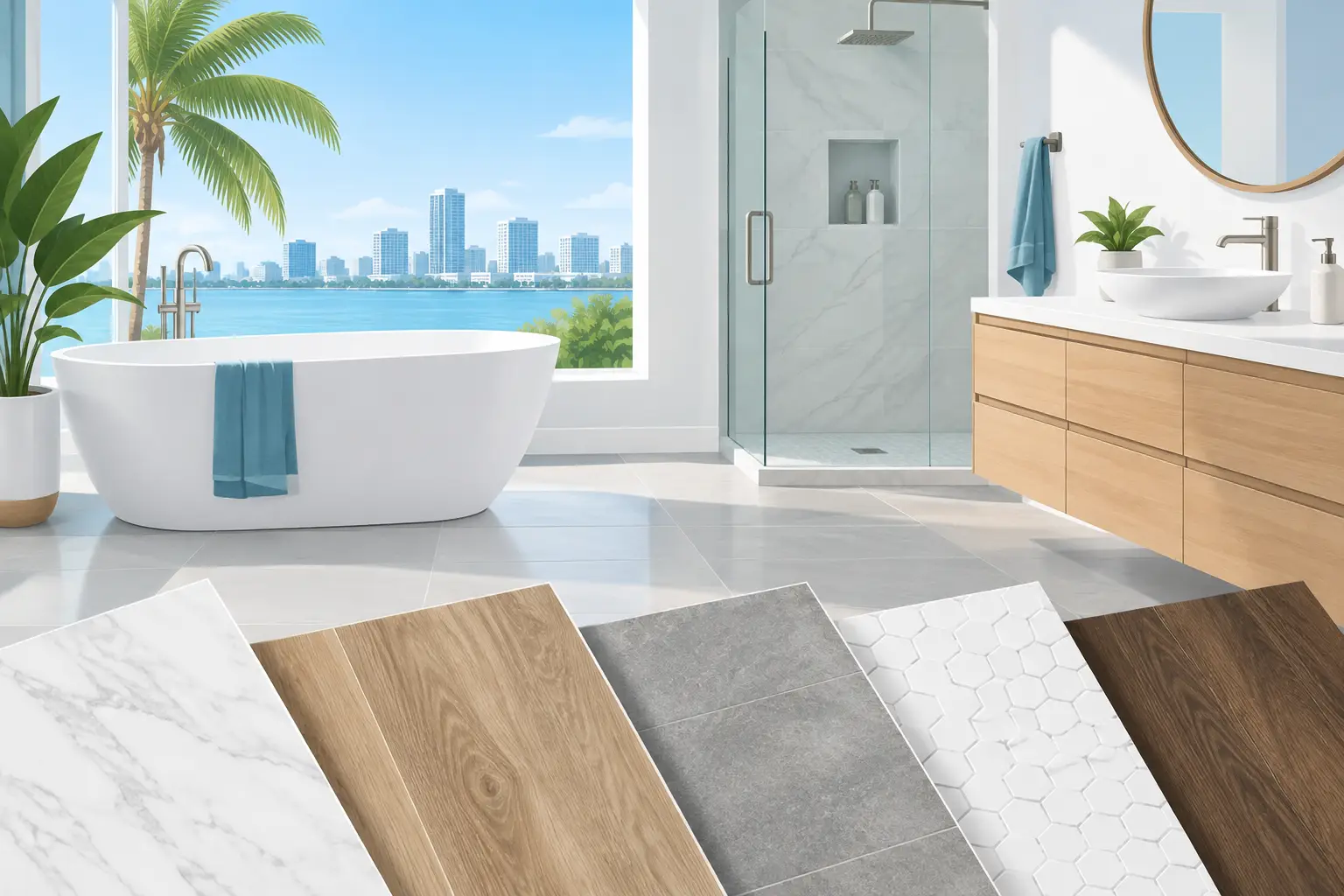
Porcelain tile is often the best bathroom flooring for homeowners who want a durable, high-value material with extensive style options. It is highly water-resistant, easy to clean, and available in finishes that resemble natural stone, wood, concrete, or patterned encaustic tile. Large-format tiles can create a clean, modern look, while smaller mosaic tiles add grip and work especially well on shower floors.
Porcelain is denser and generally less porous than standard ceramic tile, making it a particularly strong choice for full bathrooms. Ceramic tile can still be an excellent option, especially for floors outside the shower area or for projects where budget is a major factor. Both materials can last for decades when installed correctly.
The trade-off is comfort and installation cost. Tile feels cool underfoot, which many Florida homeowners appreciate, but it can be hard to stand on during a long morning routine. It also requires a properly prepared subfloor. Uneven surfaces, weak flooring, or rushed grout work can lead to cracked tile or loose grout lines later.
For a safer finish, choose a tile with a matte or textured surface rather than a high-polish finish. If you are using a large tile in the main bathroom, consider a smaller coordinating mosaic near the shower. More grout joints can provide additional traction where water is most likely to collect.
When Tile Makes the Most Sense
Tile is a smart investment for primary bathrooms, high-traffic family bathrooms, and remodels where you want a lasting finish that supports resale appeal. It is also an excellent choice when you are updating a shower and want the floor outside the shower to coordinate with the shower walls or pan.
Luxury Vinyl: Comfortable, Affordable, and Versatile
Luxury vinyl plank and luxury vinyl tile have become popular bathroom choices for good reason. Quality vinyl flooring is comfortable underfoot, warmer than tile, budget-friendly, and available in convincing wood and stone visuals. It can be particularly appealing for homeowners who want the look of hardwood in a bathroom without using real wood.
Waterproof luxury vinyl products are designed to resist moisture, but the installation details still matter. Water can find its way through poorly sealed edges, around toilets, or beneath loose transitions. A qualified installer will address these areas carefully and follow the product manufacturer’s requirements.
Vinyl is also a practical option when remodeling on a tighter timeline or working with an existing floor that does not need extensive leveling. Depending on the product and site conditions, it may be installed over certain existing hard surfaces. That can reduce demolition work, though adding another layer is not always the right answer. Door clearances, vanity height, and toilet flange placement should all be checked before making that decision.
Luxury vinyl does have limits. It can dent or tear if a sharp object damages the surface, and lower-quality products may not look as refined as tile. For a bathroom with substantial water exposure, such as one used by young children or a busy household, select a reputable waterproof product rather than the least expensive option available.
Natural Stone: Beautiful, but More Demanding
Marble, travertine, limestone, and slate bring a distinctive look that manufactured materials cannot completely duplicate. Natural stone can make a primary bathroom feel custom and luxurious, especially when paired with a furniture-style vanity, quality cabinetry, and well-chosen lighting.
However, stone requires a realistic maintenance commitment. Many stone floors need periodic sealing to help resist moisture and staining. Some varieties are sensitive to acidic products, and polished finishes can be slippery when wet. Natural variations are part of the appeal, but they also mean samples may not show every color movement or vein in the final installation.
Stone is best for homeowners who love its natural character and are comfortable with the added cost, care, and installation requirements. Honed or textured finishes are usually more practical than polished stone in a bathroom.
Other Bathroom Flooring Options to Consider
Sheet vinyl remains a useful, economical option, particularly for secondary bathrooms, rental properties, and quick refreshes. Because it has fewer seams than plank flooring, it offers strong protection against surface water. Today’s designs are better than older sheet vinyl, although it may not deliver the same upscale appearance or long-term value as porcelain tile.
Water-resistant laminate can work in select powder rooms, but it is usually not the first recommendation for a full bathroom. Even products marketed for moisture resistance can be vulnerable if standing water reaches seams or edges. Traditional hardwood has a similar concern. It brings warmth and character, but repeated moisture exposure can cause cupping, gaps, or finish damage.
Concrete and epoxy floors can be durable choices in modern or industrial-style homes, but they are more specialized. They need careful surface preparation and can feel hard or cool. For most residential bathroom remodels, tile or luxury vinyl offers more design flexibility with fewer complications.
Match Your Floor to Your Bathroom Design
Flooring decisions should happen early in the renovation process, not after the vanity and countertop have been selected. The floor affects the room’s color balance, the finished height of the toilet and vanity, and the transition to adjoining spaces.
In a smaller bathroom, a lighter floor or large-format tile can help the room feel more open. Using the same tile on the bathroom floor and shower walls can create a cohesive look, although it is wise to use a slip-resistant version or smaller tile on the shower floor. In a larger primary bath, a patterned tile or warm wood-look vinyl can provide visual interest without overwhelming the room.
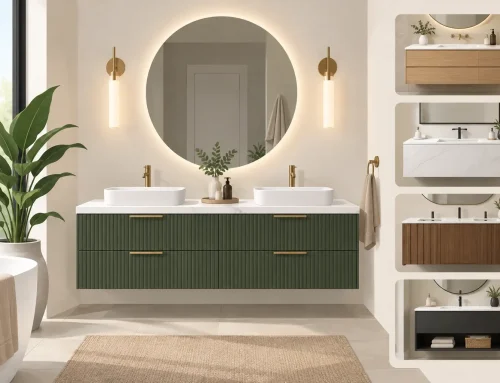
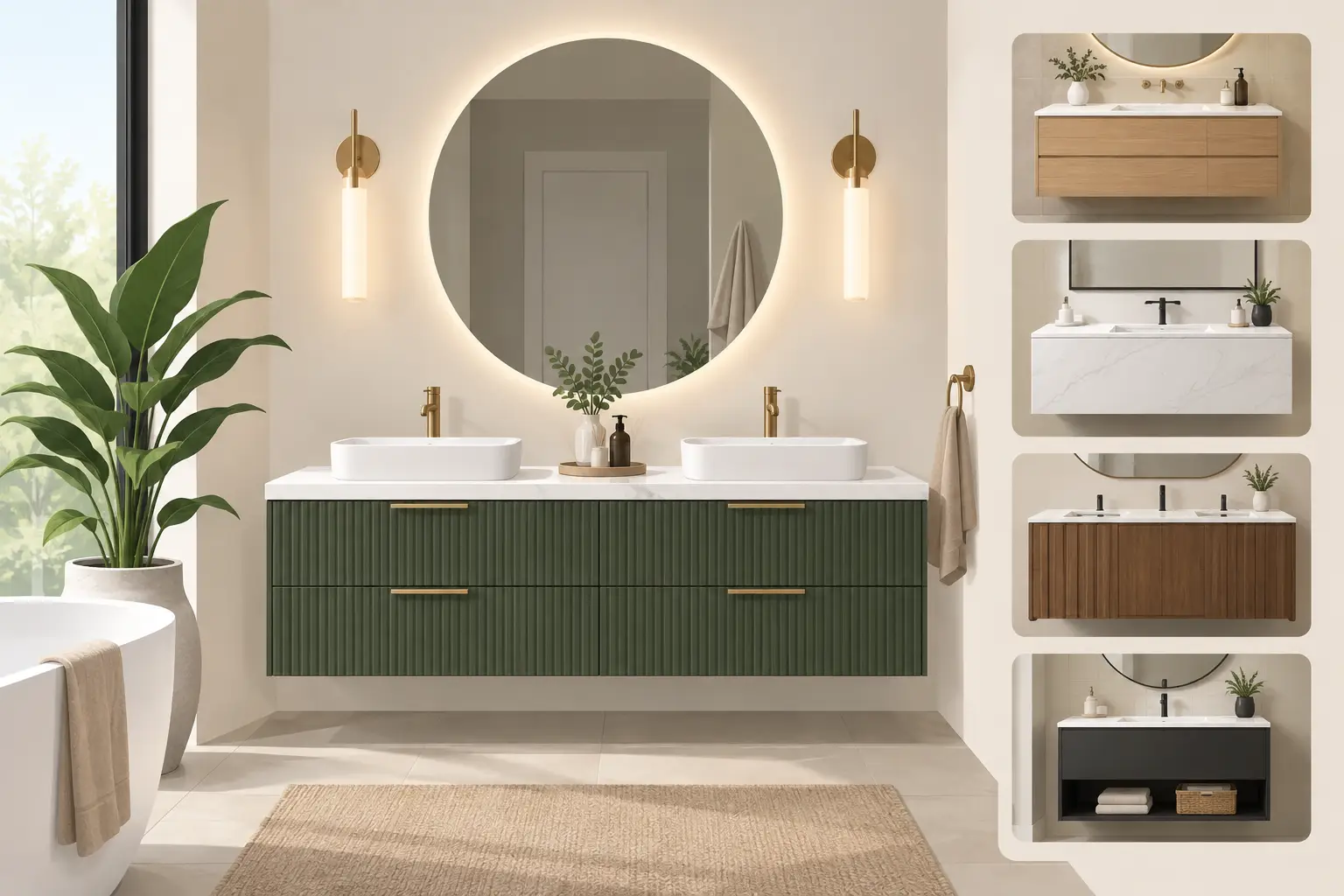
If your new vanity is the focal point, choose flooring that supports it rather than competes with it. A rich wood vanity often looks best with quiet stone-look tile, soft concrete tones, or a restrained pattern. A simple white or gray vanity can handle more personality underfoot.
Installation Details That Protect Your Investment
Even the best material can fail if the installation is not handled correctly. The subfloor must be solid, level, and suitable for the flooring selected. In bathrooms, professionals also pay close attention to waterproofing around showers, toilets, and plumbing penetrations.
For tile, that means the right underlayment, thinset, grout, and movement joints. For vinyl, it means a smooth substrate, properly prepared seams, and secure edges. Caulk should be used where flooring meets tubs, shower bases, and other surfaces that move independently. Grout is not a substitute for waterproofing, and a beautiful tile job should never hide weak preparation underneath.
It is also worth planning for future repairs. Keep a few extra tiles or planks from the same production run when possible. Colors and patterns change, and having matching material on hand can make a future repair much easier.
A Practical Choice for Your Tampa Bay Remodel
If you want the most durable all-around solution, porcelain tile is hard to beat. If comfort, value, and a faster update are your priorities, quality luxury vinyl deserves serious consideration. Natural stone brings unmatched character for homeowners willing to maintain it, while sheet vinyl can be a sensible choice for a budget-conscious refresh.
The Cabinets Store can help you consider flooring alongside vanities, cabinets, countertops, and the installation details that make a bathroom work as a complete space. Bring inspiration photos, room measurements, and an honest idea of how your household uses the bathroom. A thoughtful flooring choice made before construction begins can prevent expensive changes later and help your finished bathroom feel right every day.