
A beautiful kitchen can still feel frustrating when the blender lives behind three stockpots, cleaning supplies tip over under the sink, and the corner cabinet becomes a place where pans disappear. The best cabinet accessories for storage solve those daily problems by making what you already own easier to see, reach, and put away.
For a Tampa Bay kitchen or bathroom remodel, accessories are not an afterthought. They are part of the plan. The right choices can make a modest cabinet layout feel more functional than a larger room with basic shelves, while the wrong choices can use up budget without improving how the space works.
Start With the Problems You Actually Have
Before choosing organizers, pay attention to the items that create friction in your current kitchen or bath. Maybe it is a deep base cabinet full of small appliances, a crowded utensil drawer, or a bathroom vanity with no practical place for hair tools and toiletries. Storage accessories work best when they address a specific habit rather than a vague goal of being more organized.
Think about who uses the room, too. A household that cooks most nights may benefit from roll-out trays, vertical tray storage, and a dedicated pull-out for spices. A family with young children may prefer an easy-access pantry area and waste bins placed away from food prep. For a bathroom used by two people during the morning rush, drawer dividers and a built-in outlet drawer can make more difference than adding another cabinet.
Measure the contents as well as the cabinet. A pull-out that looks ideal in a showroom may not hold your widest skillet, tallest oil bottle, or largest mixing bowl. Cabinet width, interior depth, door swing, plumbing, and drawer clearance all affect what will fit.
Best Cabinet Accessories for Storage in the Kitchen
Roll-Out Shelves for Deep Base Cabinets
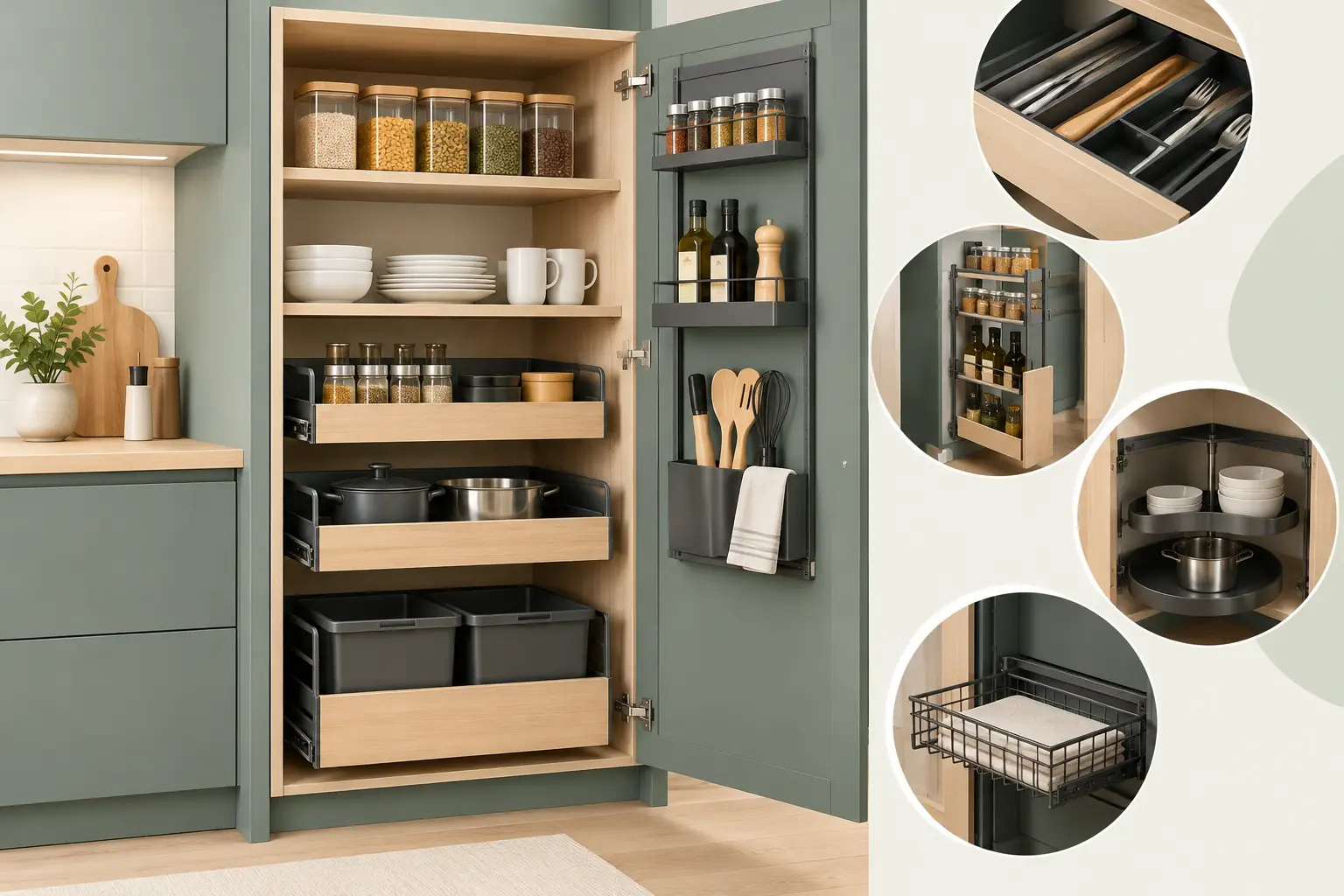
Roll-out shelves are one of the most useful upgrades for base cabinets. Instead of kneeling down and reaching into a dark back corner, you pull the shelf toward you and see the entire contents at once. They work especially well for pots, pans, small appliances, serving bowls, food containers, and bulk pantry goods.
Full-extension hardware is worth considering because it brings the shelf all the way forward. Soft-close slides also help when shelves carry heavy cookware. The trade-off is capacity: a roll-out shelf has sides and hardware that take up a small amount of interior space. In most busy kitchens, the easier access is well worth it.
Drawer Dividers and Peg Systems
Drawers are naturally efficient because they bring storage to you. But an undivided drawer can quickly become a mixed pile of utensils, wraps, batteries, and gadgets. Adjustable dividers create designated zones and can change as your needs do. They are an affordable, practical choice for everyday utensils, coffee supplies, and bathroom essentials.
For dishes, a peg system in a deep drawer can be even more valuable. Movable pegs keep stacks of plates and bowls from shifting, and they eliminate the need to lift heavy dinnerware out of an upper cabinet. This option is especially helpful for homeowners planning to age in place or anyone who wants a more comfortable kitchen layout.
Pull-Out Waste and Recycling Centers
A freestanding trash can takes up floor space and often becomes an obstacle in a busy kitchen. A pull-out waste center keeps trash and recycling contained inside a base cabinet, close to the sink or main prep area. Two-bin systems are a popular choice for households that separate recycling, while a smaller secondary bin can work for compostable scraps.
Placement matters. Do not automatically put it under the sink if plumbing already limits that cabinet. A cabinet beside the sink or near the dishwasher may offer a better route for cleanup. This is a small planning decision that can make the kitchen feel noticeably easier to use every day.
Vertical Dividers for Trays and Bakeware
Cookie sheets, cutting boards, cooling racks, and platters are awkward to stack. Vertical dividers turn them into easy-to-grab files instead. A narrow base cabinet near the oven is usually the best location, although an upper cabinet can work for lighter items.
This accessory is simple, but it prevents the familiar clatter that happens when you need the one baking sheet buried at the bottom of a stack. If your kitchen includes tall pantry cabinets, vertical dividers can also organize sheet pans and trays there.
Pull-Out Spice and Pantry Storage
Spices tend to multiply, then vanish behind taller bottles. A narrow pull-out beside the range keeps frequently used seasonings visible and close to where you cook. Wider pantry pull-outs are useful for dry goods, snacks, canned foods, and cooking oils.
There is a balance to consider. Pull-out pantry systems offer excellent visibility, but very tall, heavily loaded pull-outs can be more expensive than fixed shelves and need quality hardware. For some kitchens, a well-designed pantry cabinet with adjustable shelves and door storage delivers plenty of function at a more budget-friendly price.
Corner Cabinet Solutions
Corner cabinets offer substantial square footage, but traditional fixed shelves can waste much of it. Modern corner solutions include rotating trays, swing-out shelves, and pull-out systems that bring stored items forward. These are ideal for cookware, mixing bowls, and less frequently used small appliances.
Not every corner needs the most elaborate mechanism. A simple rotating tray may be the right value for a family that wants accessible storage without adding too much cost. More advanced pull-out systems can be worthwhile when the kitchen has limited storage and every cabinet needs to work hard.
Accessories That Make Bathroom Vanities More Useful
Bathroom storage has its own challenges: narrow drawers, plumbing under the sink, tall bottles, and shared personal items. The best cabinet accessories for storage in a bathroom focus on keeping daily necessities visible without leaving the countertop crowded.
Drawer organizers separate cosmetics, toothbrushes, grooming tools, and medications so they do not collect in a single drawer. A shallow top drawer with dividers is ideal for frequently used items, while deeper drawers can hold folded towels and backup supplies. If outlets can be planned during the remodel, a dedicated charging drawer is a clean solution for electric toothbrushes, shavers, and hair tools.
Under-sink pull-outs can use the space around plumbing more effectively, particularly for cleaning products and extra soap. However, the vanity design needs to allow for the drain location. In some cases, drawers with U-shaped cutouts around plumbing provide better access than a standard cabinet with a shelf.
Tall linen cabinets deserve careful interior planning as well. Adjustable shelves let the cabinet evolve from towel storage to toiletries or cleaning supplies. Door-mounted racks can hold small items, but avoid overloading the door, especially on narrower cabinet doors.
Choose Accessories During the Design Stage
Accessories are easier and usually more cost-effective to plan before cabinets are ordered. Cabinet dimensions can be selected around the organizer rather than trying to force an organizer into whatever space remains. For example, choosing the right base cabinet width early makes room for a waste pull-out, while a deep drawer cabinet can replace several less useful fixed-shelf cabinets.
This is also the time to prioritize. If the budget does not allow every upgrade, start with the places you use multiple times a day: trash and recycling, cookware, dishes, utensils, and under-sink storage. Decorative accessories can wait; access and organization pay you back every morning and every dinner cleanup.
At The Cabinets Store, design guidance can help homeowners compare cabinet lines and accessories based on real room dimensions, everyday routines, and renovation goals. A showroom appointment is useful because you can open drawers, test pull-outs, and get a clearer sense of which features feel worthwhile for your home.
Do Not Over-Organize the Cabinetry
More accessories are not always better. Too many narrow pull-outs can fragment storage, and specialty inserts can become limiting if your household changes. Leave some flexible space for the items you have not thought about yet, including oversized serving pieces, new appliances, or changing pantry needs.
Quality matters most on moving parts. Look for sturdy construction, full-extension slides where access is important, and hardware rated for the weight you intend to store. A well-built roll-out shelf used every day is a better investment than a collection of novelty organizers that do not fit your routine.
The goal is not a kitchen or bathroom that looks organized only on move-in day. It is a room where putting things away feels natural, finding them takes seconds, and the cabinetry supports the way your household really lives.





Leave A Comment
You must be logged in to post a comment.