
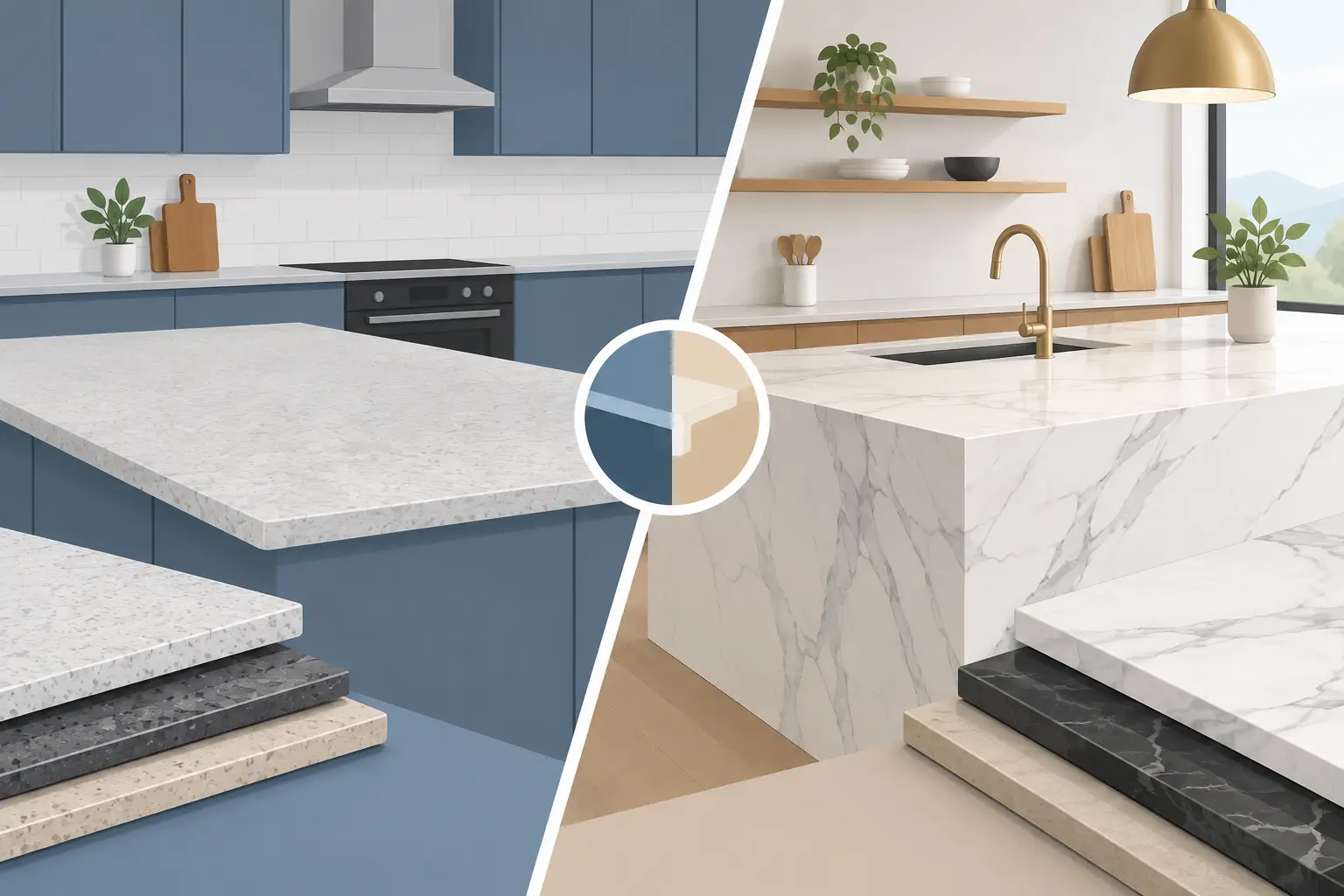
A countertop can make a budget cabinet installation look polished, or make a beautiful cabinet layout feel unfinished. When homeowners compare prefabricated versus custom countertops, the real question is rarely which option is universally better. It is which one fits the room, the renovation budget, and the way your household uses the space.
For a straightforward Tampa Bay kitchen or bathroom update, prefabricated countertops can offer attractive materials and faster turnaround at a lower price. For rooms with detailed layouts, unique dimensions, or a specific design vision, custom fabrication often earns its higher cost through a better fit and more choices. Knowing where each option shines helps prevent a costly decision based on a showroom sample alone.
What Is a Prefabricated Countertop?
A prefabricated countertop, often called prefab, is a stone or engineered-stone piece manufactured in common sizes before it is assigned to a specific home. Many are available in popular lengths and depths, with one long edge already polished. Prefab granite and quartz frequently include a finished front edge and, in some cases, an attached backsplash.
Because much of the cutting and edge work is done ahead of time, there is less labor at the fabrication stage. That can reduce both material waste and installation cost. Prefab countertops are commonly used for galley kitchens, rental-property renovations, bathroom vanities, laundry rooms, and other spaces with fairly standard dimensions.
The word “prefabricated” does not mean low quality. A prefab quartz or natural-stone top can still be durable and attractive. The difference is in the level of flexibility. You select from available sizes, colors, profiles, and configurations rather than starting with a full slab and designing every detail around your room.
What Makes a Countertop Custom?
A custom countertop is fabricated for your exact cabinet layout after measurements are taken. The fabricator creates a template for the walls, corners, sink, cooktop, overhangs, and any other details that affect the final shape. The countertop is then cut and finished to suit the project.
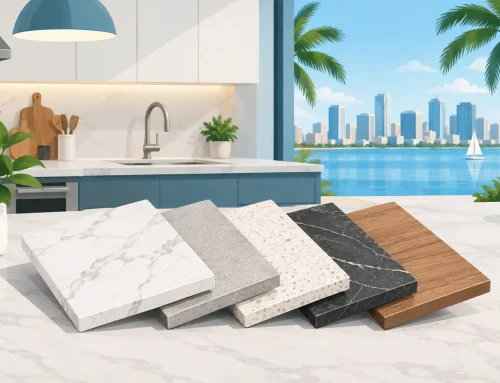
Custom work can be made from quartz, granite, marble, quartzite, solid surface, porcelain, and other materials, depending on the supplier and fabrication plan. It allows more freedom in slab selection, thickness, edge profiles, seam placement, backsplash height, and cutout placement.
That freedom matters in homes where walls are not perfectly straight, an island has seating on multiple sides, or a kitchen includes a range, angled corner, waterfall end, or oversized sink. In a bathroom, custom fabrication can also make it easier to coordinate a vanity top with vessel sinks, wall-mounted faucets, or an unusual room footprint.
Prefabricated Versus Custom Countertops: The Key Differences
Cost is usually the first difference homeowners notice. Prefab countertops generally cost less because they use standardized pieces and require less fabrication time. If your cabinets fit common countertop dimensions and you choose an in-stock option, the savings can be meaningful.
Custom countertops typically cost more because the quote includes templating, slab handling, detailed cutting, finishing, and installation. A custom project may also require more material than the finished countertop itself, particularly when a large slab is needed for a small but complex layout. Still, the lowest initial price is not always the best value if a prefab option creates awkward seams, unnecessary filler, or compromises in the design.
Fit is the next major distinction. A prefab piece may work beautifully on a straight vanity or a simple run of base cabinets. It can be less forgiving in older homes, where walls can bow or corners may not be square. Custom fabrication is designed around those real-world conditions, allowing the installer to account for small variations that could otherwise leave visible gaps.
Selection is also different. Prefab inventory tends to focus on popular colors and standard edge styles. That is useful when you want a clean, proven look without spending weeks choosing from every slab in a warehouse. Custom countertops give you a much broader design range, especially if veining direction, a particular shade, or a distinctive edge is central to the look of the room.
Finally, consider seams. Every large countertop may require seams, including custom tops, because slabs have size limits. The advantage of custom fabrication is that seam locations can often be planned more carefully around the layout and slab pattern. On a prefab installation, seams may be more dependent on the sizes available.
When Prefab Is the Smart Choice
Prefab is often the practical answer when the layout is simple and the renovation budget needs to stay focused on cabinets, flooring, lighting, or other priorities. A standard bathroom vanity is a good example. If the cabinet width is common, the sink location is uncomplicated, and the selected material is available in a fitting size, a prefab top can provide a finished appearance without paying for customization you do not need.
It can also be a strong option for homeowners preparing a property for sale, refreshing a guest bath, updating a rental, or completing a DIY-friendly project. The important step is verifying dimensions before ordering. Measure cabinet runs carefully, but remember that final countertop measurements should account for wall conditions, overhangs, and sink requirements.
Prefab can be especially appealing when timing matters. Availability varies by color, material, and local inventory, but choosing an in-stock standard size can reduce the waiting associated with special-order slabs and extensive fabrication.
When Custom Fabrication Is Worth It
Custom is usually the better investment when the countertop is a defining feature of the renovation. A large kitchen island, for example, often benefits from a carefully selected slab, a planned seam strategy, and the right overhang for seating. If you want dramatic quartz veining to flow across an island, custom fabrication gives you more control over how the material is cut and positioned.
Choose custom when your layout has multiple turns, nonstandard depths, tall backsplashes, a farmhouse sink, or appliances that require precise cutouts. It is also the safer choice when cabinets meet uneven walls or when you are installing high-end materials that should be handled with care.
There is a functional reason to go custom as well. Countertop support, overhang limits, sink mounting, and cutout spacing all affect performance. A professional design and installation team can coordinate these details with the cabinet plan before anything is ordered. That reduces the risk of discovering too late that a selected top does not work with your sink, faucet, or cabinet configuration.
Material Matters as Much as Fabrication
Whether a countertop is prefab or custom is only one part of the decision. The material should fit your household and maintenance expectations.
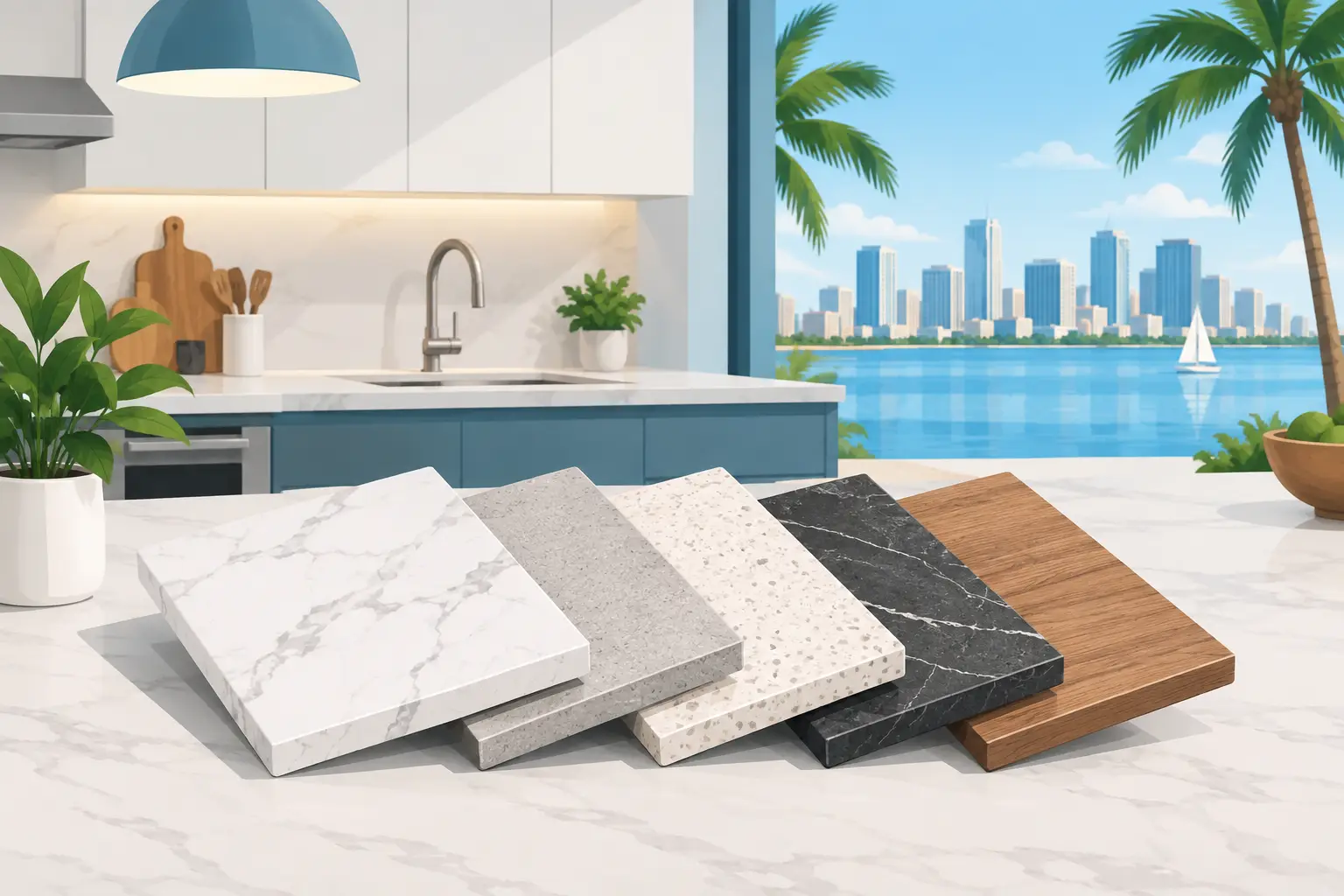
Quartz is a popular choice for busy kitchens and baths because it is nonporous and does not need routine sealing. It comes in many consistent colors and patterns, though it should not be exposed to excessive heat. Granite offers natural movement and excellent durability, but it may require periodic sealing depending on the stone. Marble delivers a classic look but is more vulnerable to etching and staining, making it best for homeowners who are comfortable with a lived-in patina.
A lower-cost prefab granite top may be a better fit than a custom marble top if easy care is your priority. On the other hand, a custom quartz surface may be worthwhile if you need a specific color to work with cabinetry, tile, and flooring. Material performance and fabrication approach should be considered together, not as separate decisions.
Questions to Settle Before You Choose
Start with the cabinet layout. Is it one straight run, a standard vanity, or a room with an island, corners, and several appliances? Then think about the visual goal. If a simple neutral top will support the rest of the design, a standard prefab selection may be all you need. If the countertop is meant to be the focal point, custom options provide more room to get the details right.
Ask for clarity on what the quoted price includes. Countertop pricing can involve material, fabrication, sink cutouts, edge profiles, delivery, installation, removal of an existing top, plumbing reconnection, and backsplash work. Comparing two prices without comparing the included services can create surprises later.
It also helps to make countertop decisions early in the cabinet design process. Cabinet depth, appliance placement, sink size, and seating overhangs should work together. At The Cabinets Store, homeowners can coordinate cabinetry, design guidance, and renovation planning in one place, which makes those decisions easier to manage before installation day.
The best countertop choice should feel intentional, not like a last-minute compromise. Bring cabinet measurements, a few inspiration photos, and an honest budget to your design conversation. With the right plan, you can put your investment where it will make the biggest difference every time you walk into the room.