
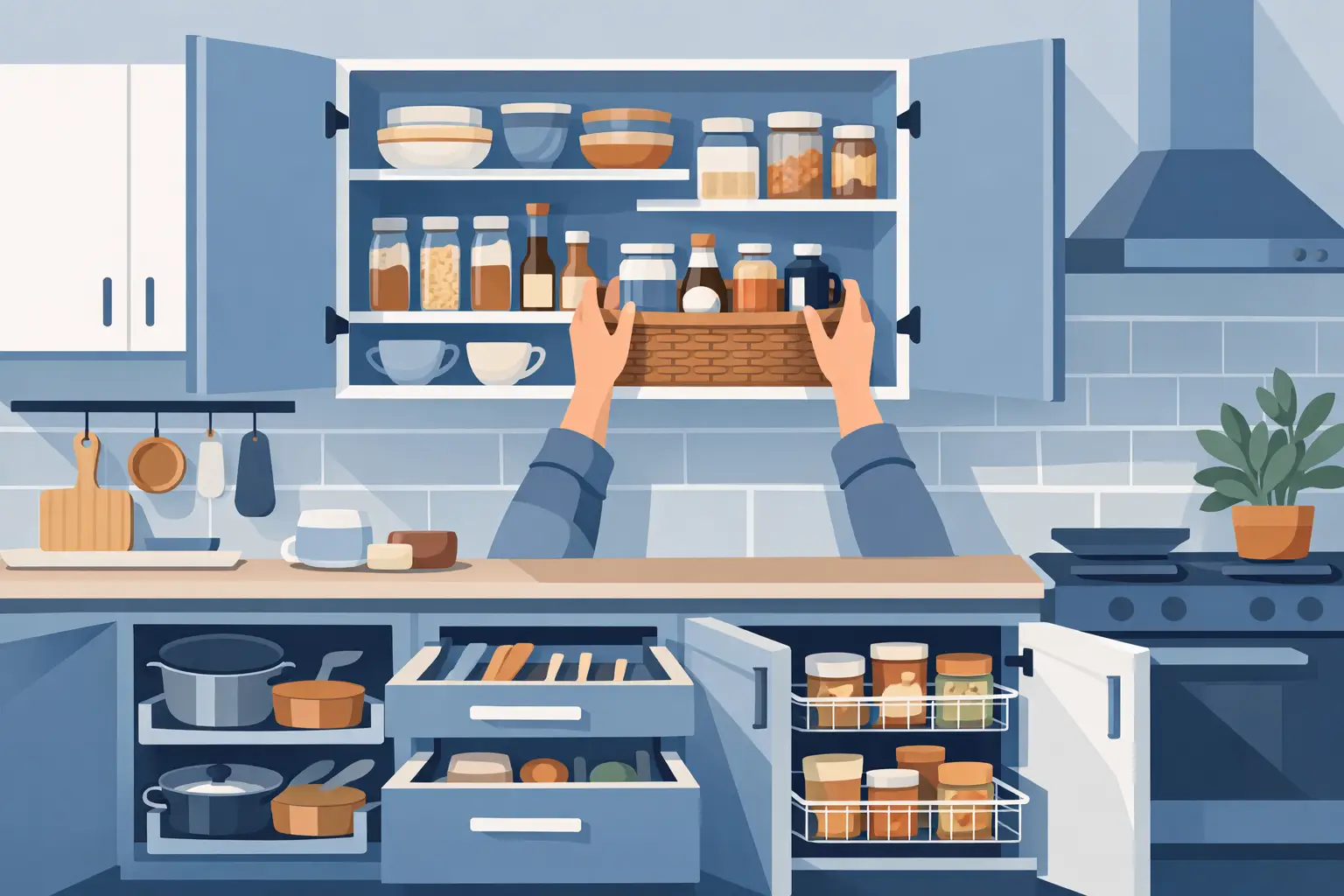
A kitchen can have beautiful cabinet doors, new countertops, and plenty of square footage yet still feel difficult to use. The usual problem is not a lack of cabinets. It is that everyday items are stored without a plan. Learning how to organize kitchen cabinets starts with matching what you store to how you actually cook, clean, and serve meals.
The goal is not to create a picture-perfect kitchen that only works for a week. It is to build a setup that makes unloading groceries, preparing dinner, and putting dishes away feel easier every day. Whether you are refreshing your current kitchen or planning a remodel, these practical steps can help you make better use of every cabinet.
Start by Emptying and Editing
It is tempting to buy organizers first, but that can lead to spending money on storage for items you do not need. Begin one cabinet at a time. Remove everything, wipe down shelves, and sort items into groups such as cooking tools, bakeware, dishes, food storage, pantry goods, and cleaning supplies.
As you sort, be honest about what earns cabinet space. Donate duplicate gadgets, chipped mugs, expired food, and cookware you never reach for. A large roasting pan used once a year may deserve a higher shelf or a less convenient cabinet. The skillet you use four nights a week should not be buried behind it.
This editing step matters even more before a kitchen renovation. Knowing what you own helps you choose cabinet sizes, drawer configurations, and accessories that fit your household instead of relying on generic storage assumptions.
How to Organize Kitchen Cabinets by Zone
The easiest way to maintain an organized kitchen is to create zones. A zone keeps items near the place where they are used, which reduces unnecessary steps and prevents cabinets from becoming catch-all spaces.
Create a cooking zone around the range
Keep pots, pans, lids, cooking utensils, spices, cooking oils, and oven mitts close to the range. A deep drawer is often more convenient than a lower cabinet for pots and pans because you can see everything from above. If you have a standard base cabinet, a pull-out shelf or roll-out tray can make heavy cookware much easier to access.
Store everyday spices in a drawer insert, a shallow pull-out, or a cabinet rack where labels are visible. Avoid placing oils and spices directly beside a hot range if heat exposure is a concern. A nearby cabinet is usually the better choice.
Set up a prep zone near your main work surface
Your prep zone should hold cutting boards, knives, mixing bowls, measuring cups, colanders, and small appliances you use often. The best location is near the countertop where you naturally chop and assemble meals.
Knife blocks can take up valuable counter space, so a dedicated drawer insert is worth considering if your kitchen layout allows it. Vertical dividers inside a cabinet also keep cutting boards, baking sheets, and serving trays from turning into a noisy stack that has to be lifted apart.
Keep dishes close to the dishwasher
Plates, bowls, glassware, and everyday flatware should be near the dishwasher whenever possible. This small decision makes cleanup faster because everything has a short path from the dishwasher to its assigned home.
Place daily-use dishes on the lowest comfortable shelf. Reserve higher shelves for serving platters, holiday glassware, or pieces that come out only when guests visit. If children help set the table, consider storing durable cups and snack dishes in a lower drawer or cabinet they can reach safely.
Give food storage its own home
Food containers are often one of the first cabinet categories to become chaotic. Keep containers and lids together in one area, ideally near the refrigerator, dishwasher, or meal-prep counter. Nest containers by size and use a lid organizer so lids stand upright instead of sliding into a pile.
There is a trade-off here: nesting saves space, while storing containers with lids attached makes them faster to grab. For most households, nesting the containers and organizing lids vertically provides the best balance.
Use a baking and pantry zone
Keep baking dishes, measuring tools, flour, sugar, and specialty ingredients together if you bake regularly. If your cabinets serve as your pantry, arrange food by category rather than trying to organize every item by height alone. Breakfast foods, canned goods, snacks, pasta, and baking supplies are easier to find when grouped by use.
Clear bins can help corral small packets and snack bags, but they are not mandatory. Simple shelf risers, labeled baskets, and turntables are often enough. The best system is one that every member of the household will put back correctly.
Make Lower Cabinets Work Harder
Lower cabinets hold some of the most useful storage in the kitchen, but their depth can make them frustrating. If you have to kneel down and reach past several items to find a pan, the space is not working as efficiently as it could.
Pull-out shelves, drawers, and cabinet organizers bring the back of a cabinet to you. They are especially helpful for cookware, small appliances, dry goods, and cleaning supplies. A lazy Susan can be useful in a corner cabinet, though it works best for lightweight items that will not tip or jam the mechanism.
Under the sink, use a small caddy for cleaning products and keep a tray beneath bottles to catch leaks. Do not overcrowd this cabinet. Plumbing takes up valuable room, and quick access matters when you need a sponge, trash bags, or dishwashing supplies.
If you are replacing cabinets, consider how much drawer storage you want before finalizing your layout. Modern deep drawers, pull-out trash systems, and dedicated tray storage can eliminate many of the organization challenges associated with traditional shelf cabinets.
Use Upper Cabinets for Visibility, Not Storage Battles
Upper cabinets are best for lighter, frequently used items. Group glasses, mugs, dishes, and pantry staples where they are easy to see and reach. Keep the most-used pieces between waist and eye level whenever possible.
A shelf riser can double the usable space for short items such as mugs or small bowls. For tall cabinets, adjustable shelves provide more flexibility than trying to force every item into the same shelf height. Leave a little open space rather than filling every inch. Cabinets that are packed tightly tend to become disorganized faster.
For homeowners in the Greater Tampa Bay area, humidity is also worth keeping in mind. Store dry goods in sealed containers, avoid leaving damp dishcloths inside cabinets, and address plumbing leaks promptly to protect both food and cabinetry.
Build Simple Habits That Keep Cabinets Organized
The best cabinet organization system is maintained through small routines, not occasional all-day cleanouts. Put items back in their assigned zones after use. When you unload groceries, rotate older pantry items forward. Once a month, take five minutes to check for expired food, nearly empty cleaning products, and containers missing their lids.
Labels can help, particularly in deep pantry cabinets or shared kitchens, but do not label every shelf just for appearance. Use labels where they solve a real problem, such as snack bins, baking supplies, or a cabinet used by several family members.
It also helps to reassess your layout after a few weeks. If coffee mugs always end up beside the coffee maker, move them there. If lunch containers accumulate near the refrigerator, that is where they belong. Your kitchen should follow your routine, not force you into someone else’s.
Plan Organization Into Your Cabinet Design
A kitchen remodel is the ideal time to make organization part of the design rather than an afterthought. Think through where you will unload dishes, prepare meals, store groceries, and manage trash. Then select cabinet features that support those habits.
At The Cabinets Store, homeowners can explore practical options such as drawer bases, pull-out storage, corner solutions, and cabinet accessories while planning a kitchen that fits their space and budget. Good design is not only about how cabinets look from across the room. It is about how they support the hundreds of small tasks that happen in a kitchen each week.
A well-organized cabinet does more than hide clutter. It gives every essential item a reliable home, leaves room for the way your household really lives, and makes the kitchen feel more enjoyable to use long after the organizing day is over.