
A bathroom vanity can look beautiful in a showroom and still be the wrong choice for a busy Tampa Bay bathroom. Steam from showers, wet towels, splash zones around the sink, and Florida humidity all test a cabinet’s finish, joints, and core material. That is why choosing the best bathroom vanity materials is about more than appearance. It is about getting the look you want without replacing swollen doors, peeling edges, or sagging drawers a few years later.
For most homeowners, there is no single material that wins in every category. Solid wood brings character, plywood provides dependable strength, MDF creates a smooth painted finish, and laminate can stretch a remodeling budget. The right fit depends on where the vanity will be installed, how the bathroom is used, and whether your priority is long-term durability, style, or cost.
What a Vanity Is Actually Made Of
When comparing vanities, separate the cabinet box from the doors, drawer fronts, countertop, and finish. A product described as a “wood vanity” may have a solid wood face frame and doors but a plywood or engineered-wood cabinet box. That is not automatically a drawback. In fact, well-built plywood boxes are often an excellent choice for bathrooms.
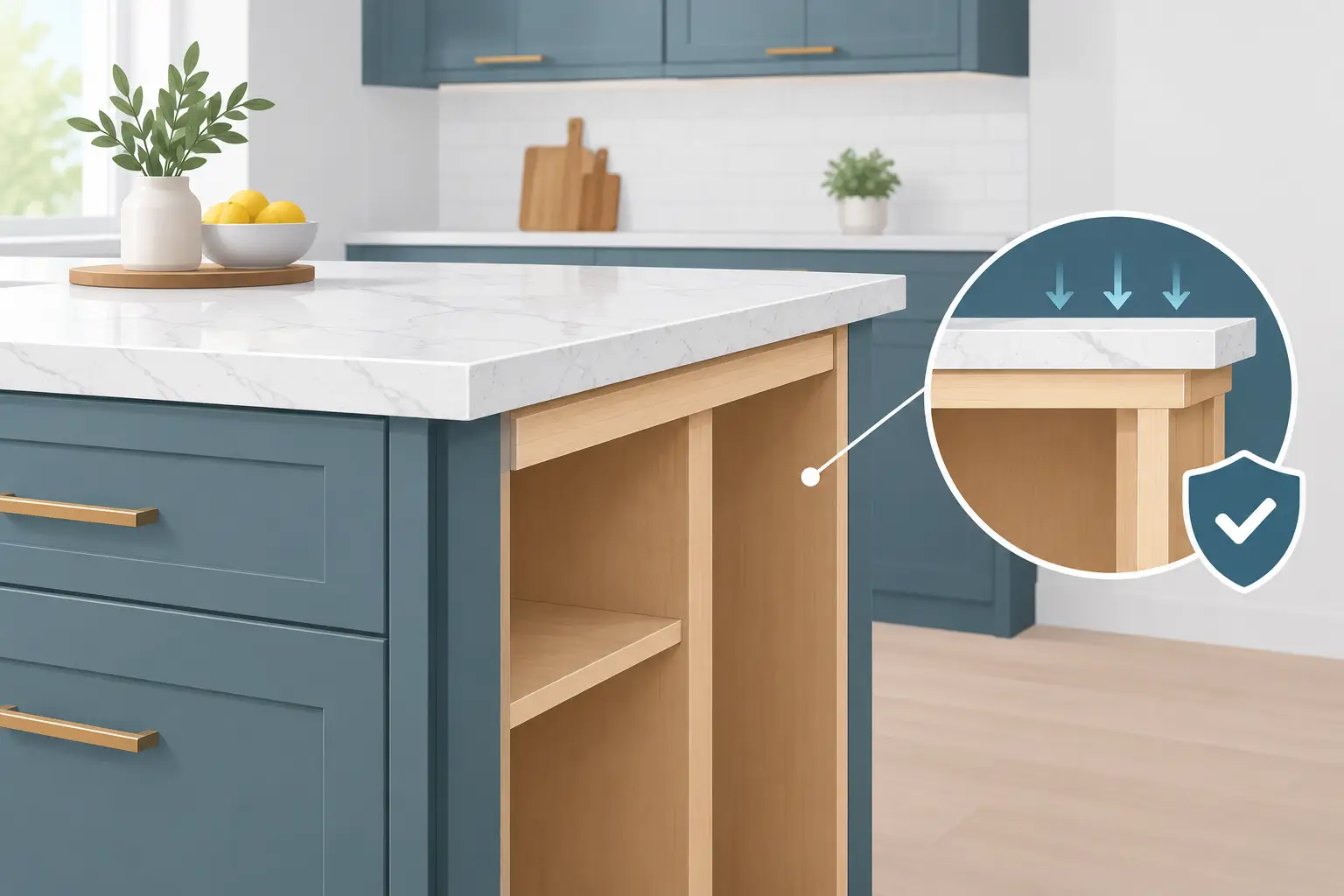
Construction details matter just as much as the label. Look for sealed cabinet edges, quality drawer slides, sturdy hinges, a finished interior, and a toe-kick or legs that keep the cabinet away from standing water. A good material cannot compensate for poor assembly or an unprotected cutout around plumbing.
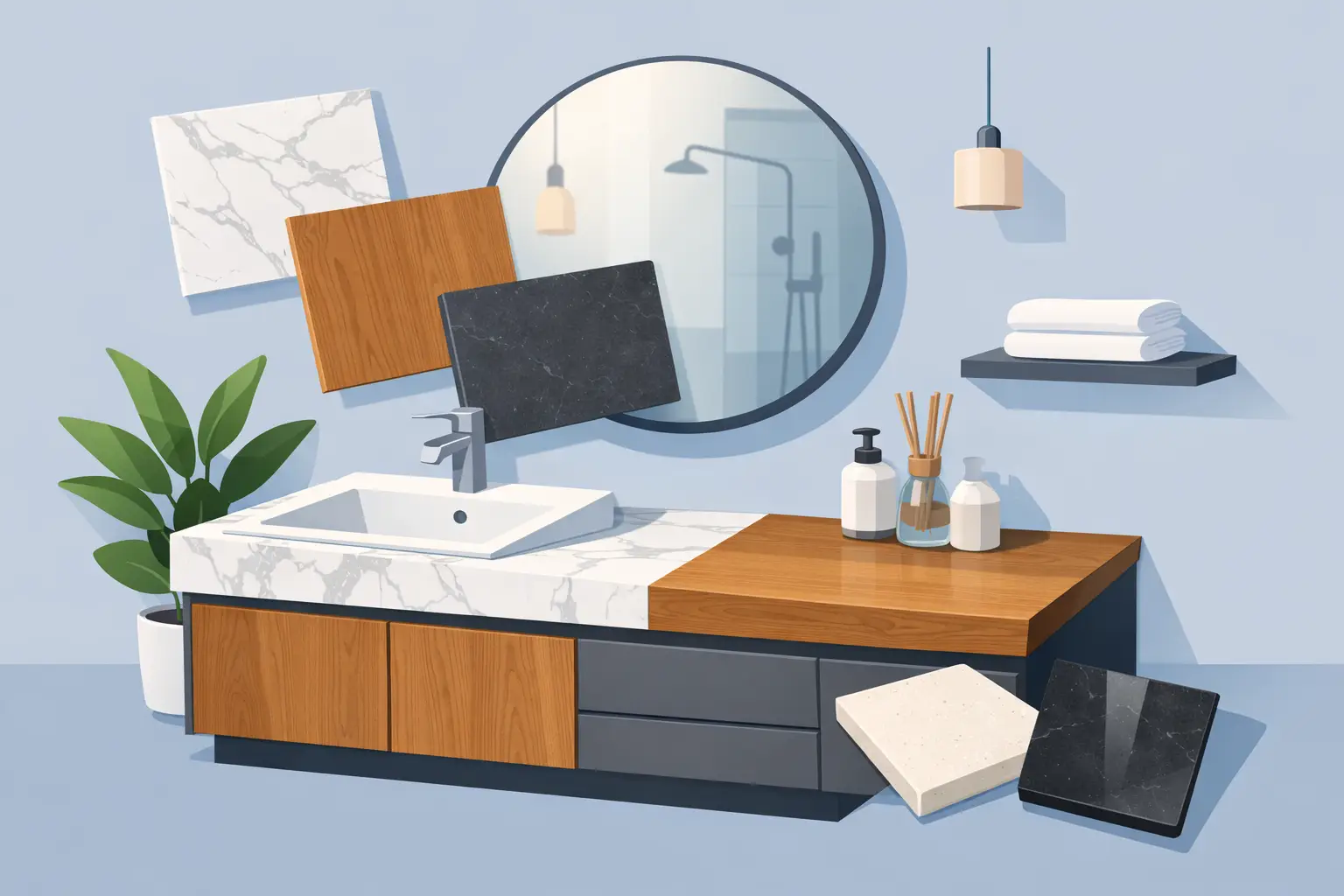
Best Bathroom Vanity Materials Compared
Solid Wood: Best for Natural Character
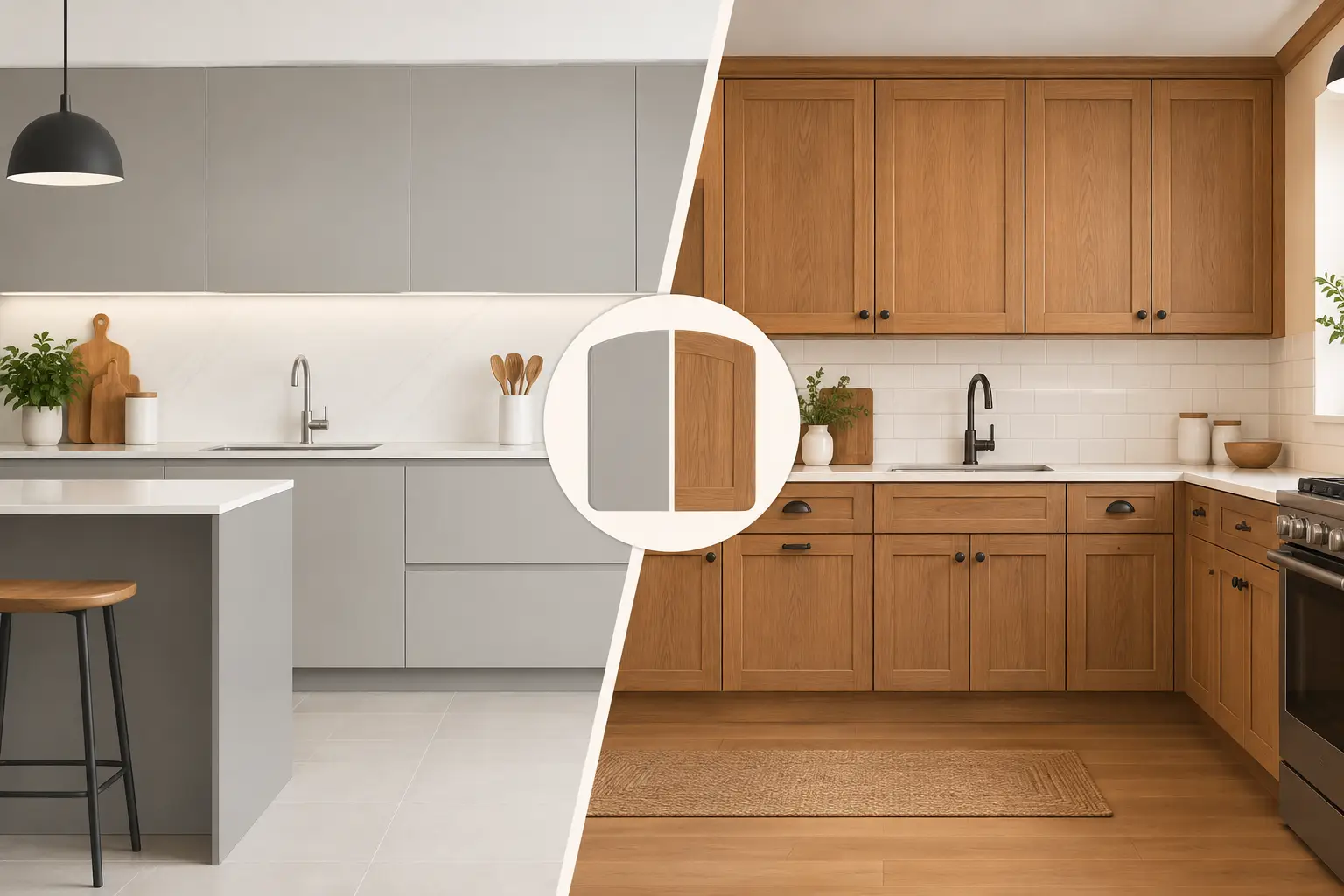
Solid wood is a classic choice for vanity doors, drawer fronts, and face frames. It offers real grain variation, warmth, and a substantial feel that suits traditional, transitional, and high-end designs. Wood species such as maple, oak, birch, and alder are commonly used, each with its own grain pattern and price point.
The trade-off is movement. Wood expands and contracts as humidity changes, which makes proper finishing and construction essential in a Florida bathroom. A well-sealed solid wood vanity can perform beautifully for years, but it needs reasonable care. Repeated puddles, dripping plumbing, and poor ventilation can damage even premium wood.
Solid wood is often worth considering when you want a stained finish, detailed door profiles, or a vanity with furniture-like appeal. It may not be the most budget-friendly option for a guest bath or rental property, where a durable engineered cabinet can make more practical sense.
Plywood: Best All-Around Choice for Humid Bathrooms
For many bathroom remodels, plywood is one of the best bathroom vanity materials available. It is made from layers of real wood veneer bonded together with alternating grain directions. That layered construction gives plywood strength and better resistance to warping than many particleboard products.
Quality plywood cabinet boxes hold screws well, support heavy countertops, and stand up to daily use. It is especially useful for wider double-sink vanities, wall-mounted designs, and cabinets with deep drawers. When paired with a durable finish and properly sealed edges, plywood offers a smart balance of performance and price.
Not all plywood is equal. Lower-grade plywood can contain voids, thin veneer layers, or adhesives that do not hold up as well around moisture. Ask what grade of plywood is used and whether the cabinet box is finished on the interior as well as the exterior. This is the kind of detail that can separate a vanity that feels solid from one that begins to show wear early.
MDF: Best for Smooth Painted Styles
Medium-density fiberboard, usually called MDF, is an engineered material made from wood fibers and resin pressed into dense panels. It does not have a natural grain, which is exactly why it performs so well under paint. If you love a crisp white, navy, green, or soft gray vanity with a smooth, consistent finish, MDF doors and drawer fronts are often an excellent option.
MDF is stable, affordable, and easy to machine into clean shaker doors or more detailed profiles. It is generally less likely than solid wood to show seasonal expansion and contraction. The concern is water exposure. Standard MDF can swell if water reaches an unsealed edge, seam, or damaged painted surface.
For bathrooms, moisture-resistant MDF is a better choice than standard MDF whenever available. Even then, it should be protected with a quality finish and kept dry at the base. MDF can be a great value for a powder room, hall bath, or primary bath with good exhaust ventilation. It is less forgiving in a bathroom where leaks or wet floors are a regular problem.
Particleboard: Best for Tight Budgets, With Limits
Particleboard is made from compressed wood particles and resin. It is often used in lower-cost ready-to-assemble vanities and can be covered with laminate, thermofoil, or veneer. Its main advantage is price. For a quick refresh, lightly used bathroom, or investment property with a carefully managed budget, it may be a reasonable option.
Its weakness is moisture. Once particleboard absorbs water, it can swell, crumble, and lose structural strength. The damage is difficult to reverse. A small leak beneath the sink or water left around the base can shorten its life considerably.
If you choose particleboard, prioritize a fully laminated or sealed cabinet, avoid exposed raw edges, and inspect the sink cabinet regularly for drips. It is generally not the first recommendation for a long-term primary bathroom remodel in Tampa Bay, but it can work when cost is the deciding factor and expectations are realistic.
Laminate and Thermofoil: Best for Easy-Care Value
Laminate and thermofoil describe finishes more than cabinet-core materials, but they play a major role in how a vanity looks and wears. Laminate is a decorative surface bonded to a substrate, often MDF or particleboard. It comes in a wide range of wood looks, solids, and contemporary textures. Quality laminate is easy to clean, resists many everyday stains, and can deliver a polished look at a practical price.
Thermofoil is a vinyl-like material heat-fused over an MDF door. It creates a smooth, often seamless appearance that is popular for simple painted-style doors. It is easy to wipe down, but it can peel if exposed to excessive heat or if its edges are damaged. In a bathroom, the bigger concern is protecting the MDF underneath from moisture once the surface is compromised.
These finishes make sense for homeowners who want a clean, coordinated design without the cost of stained hardwood cabinetry. Choose reputable construction, inspect edge banding and seams, and use a bathroom fan consistently.
Do Not Overlook the Vanity Top
The cabinet material matters, but the countertop is your vanity’s front line against water. Quartz is a popular choice because it is nonporous, low-maintenance, and available in colors that work with almost any cabinet style. It handles everyday bathroom use well without routine sealing.
Natural stone such as marble or granite brings distinctive character, but it may need periodic sealing and more mindful care around cosmetics, hair products, and spills. Cultured marble and solid-surface tops are cost-conscious alternatives with a smooth appearance and integrated sink options. Porcelain can also be an excellent moisture-resistant surface, particularly for modern designs.
Whatever top you select, make sure the backsplash, sink rim, and faucet base are properly sealed. Water often enters a vanity through these small gaps, not through the center of the countertop.
How to Choose for Your Bathroom
Start with the room’s real conditions. A powder room used by guests has different demands than a primary bathroom shared by a family. For a primary bath, a plywood cabinet box with solid wood or MDF doors usually delivers an appealing mix of durability and design flexibility. For a budget-minded guest bath, a well-finished MDF or laminate vanity can provide plenty of style without overspending.
Then consider your desired finish. Stained wood looks best on real wood veneer or solid wood components. Smooth painted doors are often a natural fit for MDF. If you want the lowest-maintenance path, a quality laminate finish on a moisture-conscious cabinet construction may be the better answer.
Finally, plan for the installation, not just the cabinet. A level vanity, correct plumbing connections, adequate ventilation, and careful sealing protect your investment. Even the best vanity can fail early if a slow drain leak goes unnoticed or a bathroom fan is never used.
At The Cabinets Store, we help homeowners compare vanity materials alongside door styles, countertops, flooring, and the practical details of the room. A vanity should fit your budget and your design, but it also needs to fit the way your household actually lives. Bring your measurements, inspiration, and questions to the planning stage, and you can choose a cabinet that still feels like the right decision long after the remodel is complete.





Leave A Comment
You must be logged in to post a comment.