

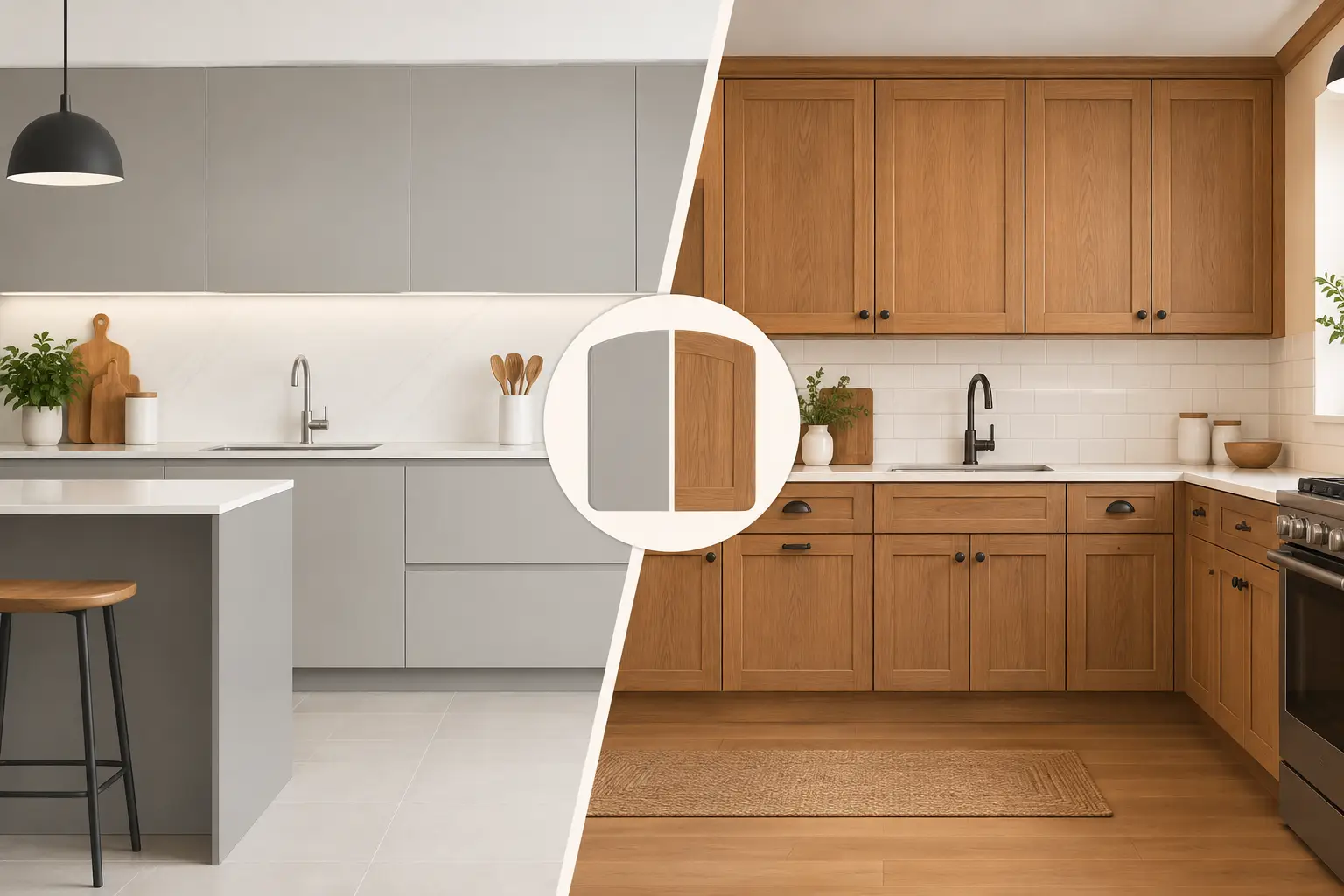
A cabinet door can set the entire tone of a kitchen or bathroom, but the material behind that look affects your budget, maintenance routine, and long-term satisfaction. When homeowners compare laminate versus wood cabinets, the right choice is rarely about one material being universally better. It comes down to how you use the room, the style you want, and where you want to invest your remodeling dollars.
For many Greater Tampa Bay homeowners, that decision also includes humidity, busy family routines, and the desire for a finished space that adds value without stretching the budget unnecessarily. Laminate can provide a clean, durable, budget-friendly look. Wood brings natural character and refinishing potential. Both can be excellent choices when selected for the right project.
Laminate Versus Wood Cabinets: The Main Difference
Laminate cabinets use a manufactured decorative surface bonded to a cabinet door or panel core. Depending on the product line, that core may be medium-density fiberboard, particleboard, or plywood. The surface can replicate wood grain, offer a smooth painted appearance, or create a modern solid-color finish.
Wood cabinets typically refer to cabinet doors and drawer fronts made from solid hardwood or wood components, such as maple, oak, birch, cherry, or alder. Cabinet boxes may still be built with furniture board or plywood rather than solid wood, which is common across many cabinet price points. This distinction matters: the door material, cabinet box construction, hardware, and installation quality all contribute to how cabinets perform.
Wood is a natural material with grain variation, texture, and depth. Laminate is engineered for consistency. Neither is automatically a sign of better quality. A well-made laminate cabinet can be a smart, lasting choice, while a poorly constructed wood cabinet may not deliver the durability you expect.
Cost: Where Laminate Often Has an Advantage
For homeowners focused on affordability, laminate cabinets generally cost less than wood cabinets. The materials and manufacturing process are more consistent, helping keep pricing within reach for kitchen updates, rental properties, first homes, and bathroom renovations where every selection affects the overall project budget.
Choosing laminate may allow more room in your budget for features that improve everyday function, such as soft-close drawers, pull-out organizers, upgraded countertops, better lighting, or a more efficient kitchen layout. Those upgrades can make a bigger difference in daily use than a door material alone.
Wood cabinets usually carry a higher price because of the raw material, finishing process, and craftsmanship involved. Costs can rise further with specialty finishes, inset construction, custom sizing, decorative details, and premium wood species. For a homeowner who loves the warmth of real wood and plans to stay in the home for years, that added investment can be worthwhile.
The practical question is not simply, “Can I afford wood?” It is, “Where will this budget create the most value for my home and my routine?”
Durability in Busy Kitchens and Bathrooms
Both materials can hold up well, but they handle wear differently.
Laminate has a hard, nonporous surface that resists many everyday stains, fingerprints, and scratches. It is especially practical for active kitchens, bathrooms used by children, and homeowners who prefer low-maintenance finishes. Smooth laminate doors are easy to wipe clean, and a high-quality wood-look laminate can hide minor daily wear better than a very dark painted finish.
Its weak point is usually the edge. If water reaches an exposed or damaged seam, the material underneath can swell. A chipped laminate surface is also difficult to repair invisibly. This is why quality edge banding, careful installation, and prompt attention to leaks are so important around sinks, dishwashers, and bathroom vanities.
Wood cabinets are durable, but they respond to their environment. Wood can expand and contract with changes in humidity, which may lead to minor movement at joints or finish lines over time. In Florida, good ventilation and climate control are helpful for any cabinetry, especially natural wood.
On the positive side, wood can often be repaired more easily than laminate. Small dents, scratches, and worn areas may be touched up, sanded, or refinished depending on the finish and construction. A natural wood cabinet can develop character over time, while a laminate cabinet tends to look most consistent when its surface remains intact.
Moisture Is a Bigger Issue Than Material Alone
A bathroom vanity beside a poorly sealed shower, or a sink base with a slow plumbing leak, can damage almost any cabinet material. Proper caulking, ventilation, plumbing connections, and installation clearances matter as much as the cabinet door you select.
For high-moisture spaces, ask about the cabinet box material, edge treatment, and warranty requirements. A beautiful door style cannot compensate for weak construction in the areas most exposed to water.
Style and Design Flexibility
Wood offers depth that manufactured materials cannot fully duplicate. Grain patterns vary from one door to another, and stains can bring out warm, traditional, coastal, craftsman, or transitional character. Wood is a strong fit for homeowners who want natural variation or detailed door profiles with a more furniture-like feel.
It is also a flexible choice for future updates. If your style changes, certain wood cabinets can be refinished or painted rather than replaced. That possibility is attractive in a long-term home, although refinishing is still a project that requires professional planning and realistic expectations.
Laminate has moved far beyond the flat, dated finishes many homeowners remember. Current options include convincing wood grains, textured surfaces, matte neutrals, crisp whites, deep colors, and clean slab-door styles. It works particularly well in contemporary, modern, minimalist, and budget-conscious transitional kitchens.
If you want a uniform color across every door and drawer front, laminate has a clear advantage. Natural wood will always have variation. That variation is exactly what some homeowners love, but it can be frustrating for someone expecting every cabinet to match perfectly.
Maintenance: What Will You Actually Want to Live With?
Laminate is usually the easier material to maintain. A soft cloth, mild soap, and water are typically enough for routine cleaning. Avoid harsh abrasives, scouring pads, and aggressive chemical cleaners that can dull or damage the surface.
Wood also benefits from gentle cleaning, but it may need more attention over the years. Heat, direct sunlight, cooking grease, and humidity can gradually affect the finish. Wipe spills promptly and use cabinet-safe cleaners rather than soaking surfaces with water.
Painted wood deserves a special mention. It offers a popular, polished look, but painted finishes can show chips or hairline cracks at joints as the wood naturally moves. This does not necessarily mean the cabinets are failing. It is a normal consideration when choosing a painted wood door for a kitchen that gets heavy use.
When Laminate Cabinets Make the Most Sense
Laminate is often the better fit when your goal is a polished remodel with controlled costs and simple upkeep. It is a strong option for rental homes, condos, starter-home renovations, secondary bathrooms, laundry rooms, and kitchens where you want to reserve more of the budget for layout improvements or countertops.
It also makes sense when you prefer a sleek, contemporary appearance or want consistent color with minimal visual variation. For a homeowner who wants the look of oak, walnut, or another wood species without the cost and maintenance considerations of natural wood, a quality wood-grain laminate can be a practical middle ground.
When Wood Cabinets Are Worth Considering
Wood cabinets can be the right investment when natural materials are central to your design vision. They are especially appealing for long-term homes, traditional or transitional spaces, and remodels where rich grain, detailed profiles, or future refinishing options matter to you.
They can also be a good choice if you value repairability. Life happens in a kitchen. A wood door with a scratch may have a better path to restoration than a deeply chipped laminate door.
Still, choosing wood does not mean you need the most expensive species or a fully custom cabinet package. The best value may be a well-built semi-custom line with a durable finish, practical storage features, and a door style that suits your home.
Look Beyond the Door Surface Before You Decide
Before finalizing laminate or wood, compare the full cabinet specification. Ask about cabinet box construction, drawer boxes, shelf thickness, hinges, glides, finish durability, door style, and available accessories. These details determine how cabinets feel and function every day.
A showroom consultation can be especially helpful because colors and textures look different under real lighting than they do on a screen. Seeing a door sample next to countertop, flooring, and backsplash selections can prevent costly second guesses later. At The Cabinets Store, homeowners can compare these options as part of a larger kitchen or bath plan rather than trying to make one material decision in isolation.
The best cabinet choice should support how you live. If easy cleanup, consistent color, and budget flexibility are highest on your list, laminate may be the clear winner. If you want the warmth, variation, and repair potential of a natural material, wood may be worth the extra investment. Choose the option that gives you confidence every time you walk into the room, not just the one that looks best in a sample photo.




Leave A Comment
You must be logged in to post a comment.