
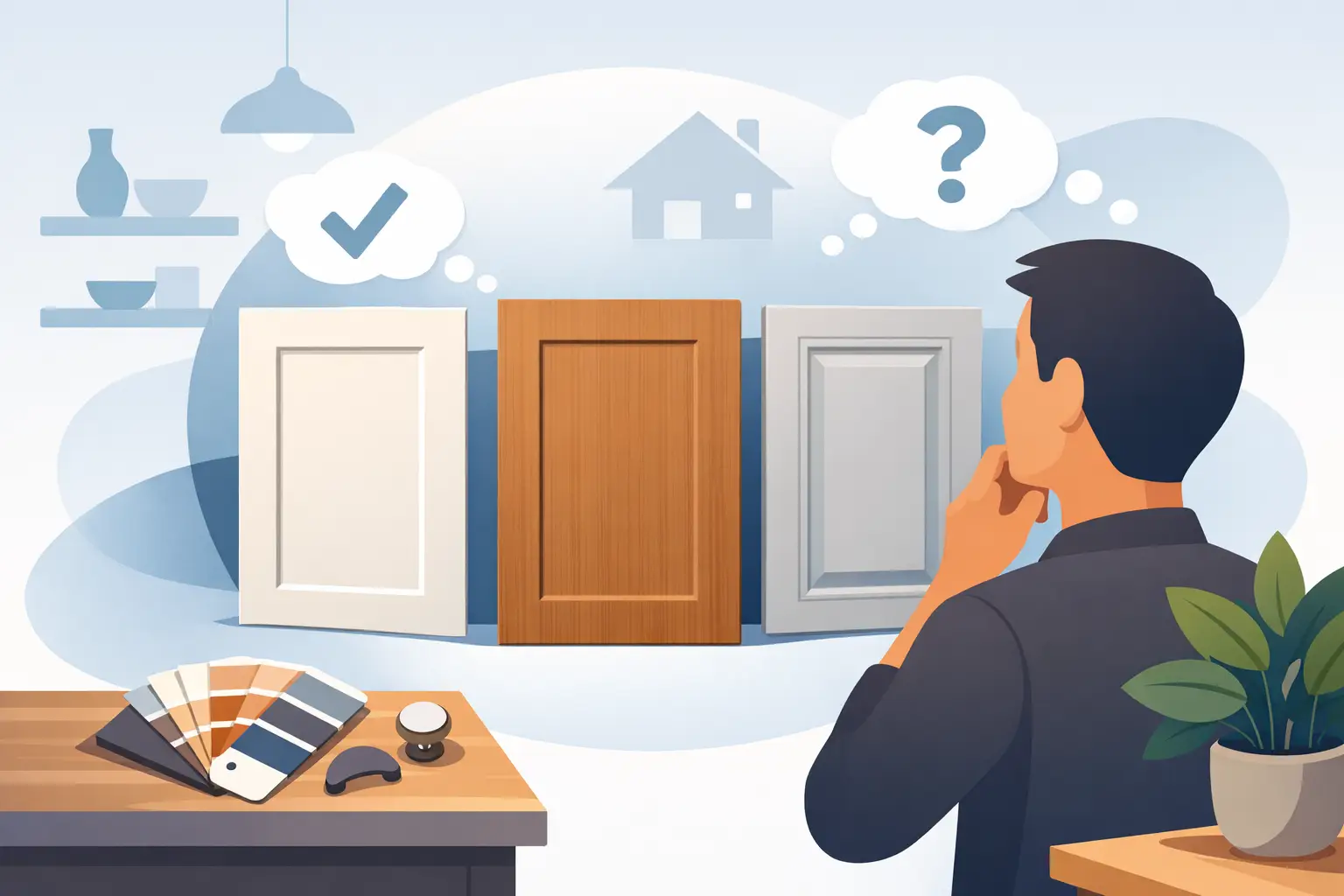
A cabinet door can make a well-planned kitchen feel dated, or give a modest remodel the polished look homeowners want. When you are deciding how to choose cabinet door style, do not start with a single sample in a showroom. Start with the room, the home, and the way your family actually lives there.
Cabinet doors cover most of the visual space in a kitchen or bathroom. Their profile affects whether the room feels clean and modern, warm and traditional, relaxed and coastal, or somewhere in between. The right choice should look at home in your space while fitting your budget, cleaning routine, timeline, and long-term plans for the house.
Start With the Style of Your Home
A cabinet door style does not need to copy every detail of your home’s architecture, but it should not fight it either. A sleek, flat-panel door can feel out of place in a heavily traditional home with ornate trim, just as a deeply detailed raised-panel door may overwhelm a simple contemporary condo.
Look at the fixed elements you are keeping: flooring, interior doors, window trim, tile, and countertops. These features set the visual direction before cabinets are installed. In many Tampa Bay homes, a transitional approach works especially well because it combines classic structure with a lighter, current finish. It is flexible enough for a family home in need of an update and polished enough for a kitchen that may support resale value later.
You do not have to match every room exactly. A bathroom can be slightly more tailored or more relaxed than the kitchen. The goal is for the cabinets to feel intentional within the larger home.
Know the Main Cabinet Door Styles
Shaker doors
Shaker doors have a simple frame around a recessed center panel. They are a practical favorite because they work with traditional, transitional, farmhouse, coastal, and many modern designs. Their clean lines allow more freedom with paint colors, hardware, backsplashes, and countertops.
For many homeowners, Shaker is the safest choice when they want a style with broad appeal. It is not automatically the best choice, though. The recessed edges collect more dust and cooking residue than a flat door, so they require a little more attention in busy kitchens.
Flat-panel or slab doors
Slab doors have one smooth, flat face with no frame or center panel. They create a clean, uncluttered appearance that suits modern, contemporary, mid-century, and minimalist spaces. They are also easy to wipe down, which is a real advantage in a frequently used kitchen or a bathroom shared by kids.
A slab door can make a compact kitchen appear more open, particularly in a light wood tone or soft neutral paint. The trade-off is that every alignment detail is more visible. Good installation and carefully selected hardware matter because the style leaves little visual distraction.
Raised-panel doors
Raised-panel doors feature a center panel that sits higher than the surrounding frame. They bring depth and traditional character to formal kitchens, classic homes, and spaces with detailed crown molding or decorative woodwork.
This style can be beautiful, but it generally reads more formal and can make a small or dark room feel visually heavier. It also has more edges to clean. If you love a traditional look but want a lighter result, consider a simpler raised-panel profile in a painted finish rather than a dark stain.
Recessed-panel and beadboard doors
Recessed-panel doors offer a framed look with a flatter center than raised-panel styles. They can feel tailored and timeless, especially in a transitional kitchen. Beadboard doors add vertical grooves for a cottage, coastal, or farmhouse look.
Beadboard brings personality, but it is a more specific design choice. In a full kitchen, too much beadboard can compete with patterned tile or busy countertops. It often works best as an accent on an island, a pantry wall, or a bathroom vanity rather than on every cabinet.
Let the Room Size Guide the Profile
Door style changes the way a room feels, even when the cabinet layout stays the same. Small kitchens and bathrooms often benefit from simpler door profiles, lighter colors, and fewer decorative details. A smooth slab door or narrow-frame Shaker door can make the cabinetry feel less bulky.
In a larger kitchen, you have more room for visual depth. A wider Shaker rail, raised-panel door, or a detailed island can add warmth without crowding the space. This does not mean every large kitchen needs ornate cabinetry. It means the room can handle a stronger design statement if that fits your taste.
Also consider natural light. Homes with abundant Florida sunlight can support darker finishes or richer wood grains more easily. In a room with limited light, bright painted cabinets and a cleaner door profile can prevent the space from feeling closed in.
Match the Door Style to Your Daily Routine
The best-looking cabinet door is not always the best fit for the way you use your home. A family that cooks every night, packs lunches, and gathers around the island needs finishes and profiles that are manageable to maintain. Smooth doors are quickest to clean. Shaker and recessed-panel doors remain very livable, but their grooves need occasional detail cleaning.
Think about fingerprints as well. Dark paint, high-gloss surfaces, and some deep stains can show marks more readily than mid-tone wood grains, textured finishes, or softer matte paints. Hardware can help here. Knobs and pulls reduce direct contact with the door face and provide an easy way to add personality.
If you are renovating for aging in place, easy-to-grasp pulls and uncomplicated door profiles can be more comfortable and practical over time. A design choice can be attractive and functional at the same time.
Choose Finish and Hardware After the Door Profile
It is tempting to fall in love with a paint color first, but the door profile should come before the finish. The same warm white looks crisp and contemporary on a slab door, then softer and more classic on a Shaker door. A natural oak finish can feel modern on a flat panel or more traditional on a raised-panel door.
Once you have narrowed down the profile, use finish and hardware to fine-tune the look. Brushed nickel or matte black pulls can make Shaker doors feel current. Simple bar pulls support a modern slab-door design. More decorative hardware can complement raised-panel cabinetry, but avoid overdoing it if the door itself already has substantial detail.
Bring countertop, flooring, paint, and tile samples to the design appointment whenever possible. Lighting changes color dramatically, and a cabinet sample that looks perfect under showroom lights can read differently in your home.
Keep Budget and Construction in the Conversation
Door style affects price, but it is only one part of the cabinet budget. Construction quality, box material, drawer hardware, finish, modifications, and installation all matter. A simpler door profile can help you direct more of the budget toward features you will notice every day, such as full-extension drawers, soft-close hinges, pantry storage, or a more durable countertop.
For value-conscious remodels, a standard Shaker or slab style is often available across several cabinet lines, making it easier to find a look you like at different price points. More intricate profiles, specialty finishes, and custom modifications may add cost or extend lead times. That does not make them the wrong choice. They simply need to fit the full project plan.
Be honest about whether you are updating for your own long-term enjoyment or preparing to sell in the next few years. A highly personal cabinet style can be exactly right for a forever home. For a near-term resale project, a versatile profile in a broadly appealing finish is usually the safer investment.
See Full-Size Samples Before You Commit
A small door sample is useful, but it cannot show the scale of an entire kitchen. Ask to see a full door whenever possible, and stand back from it. Notice the width of the rails, the depth of the panel, and how the profile feels beside your countertop selection.
It also helps to view the door at different times of day in your own home. Hold the sample near existing floors, wall color, and appliances. If your remodel includes an island in a contrasting color or wood finish, compare both door styles together. A two-tone kitchen should feel coordinated, not like two separate decisions.
At The Cabinets Store, design guidance can help you compare door styles alongside cabinet layout, storage needs, finishes, and the other materials involved in your project. That broader view often prevents a decision that looks good on a sample board but does not work in the finished room.
The right cabinet door style is the one you will still enjoy after the first excitement of the remodel has passed. Choose a profile that fits your home, supports your routine, and gives you a kitchen or bathroom you will be glad to use every day.








Leave A Comment
You must be logged in to post a comment.