
If you have started shopping for new cabinets, you have probably noticed that two kitchens can look almost identical on the outside and be built very differently underneath. That is why homeowners often ask, what is kitchen cabinets made of, and the answer matters more than most people expect. Cabinet material affects price, durability, moisture resistance, appearance, and even how long your remodel feels fresh and functional.
What is kitchen cabinets made of in most homes?
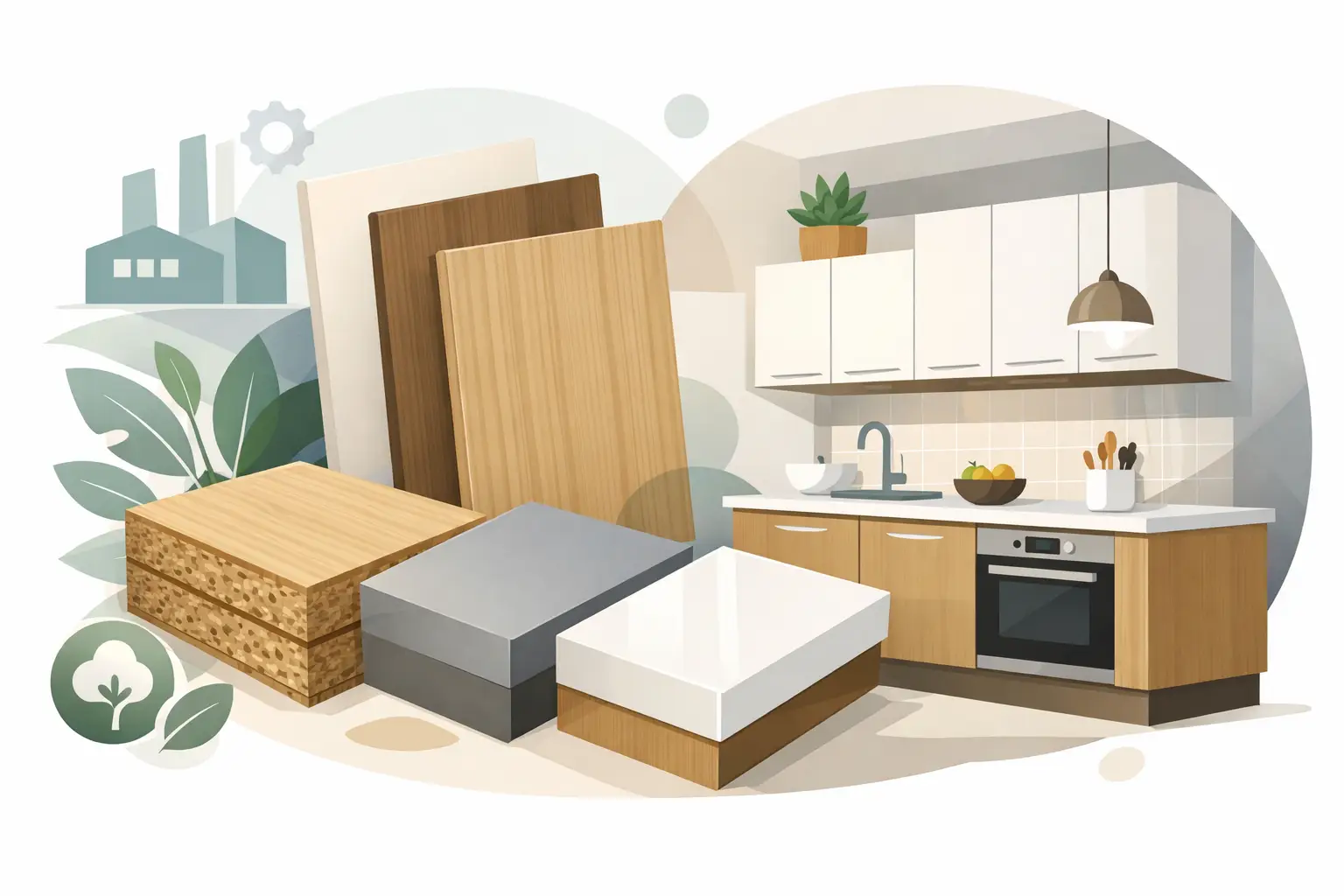
Most kitchen cabinets are made from some combination of plywood, MDF, particleboard, solid wood, and wood veneers. In many cases, a single cabinet uses more than one material. The cabinet box might be plywood or particleboard, the doors may be solid wood or MDF, and the visible finish may include a veneer, paint, or laminate.
That is why there is no one-size-fits-all answer. When homeowners ask what kitchen cabinets are made of, they are usually really asking which materials are best for cabinet boxes, doors, drawer fronts, shelves, and finishes. Each part has a different job, so the best material for one area may not be the best for another.
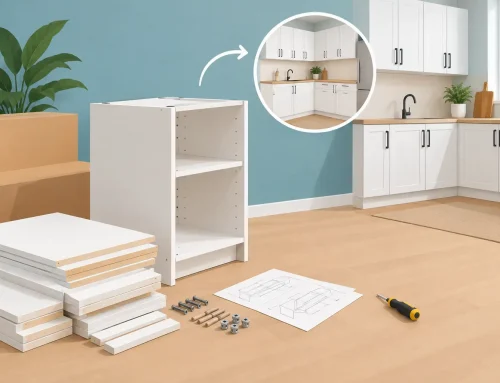
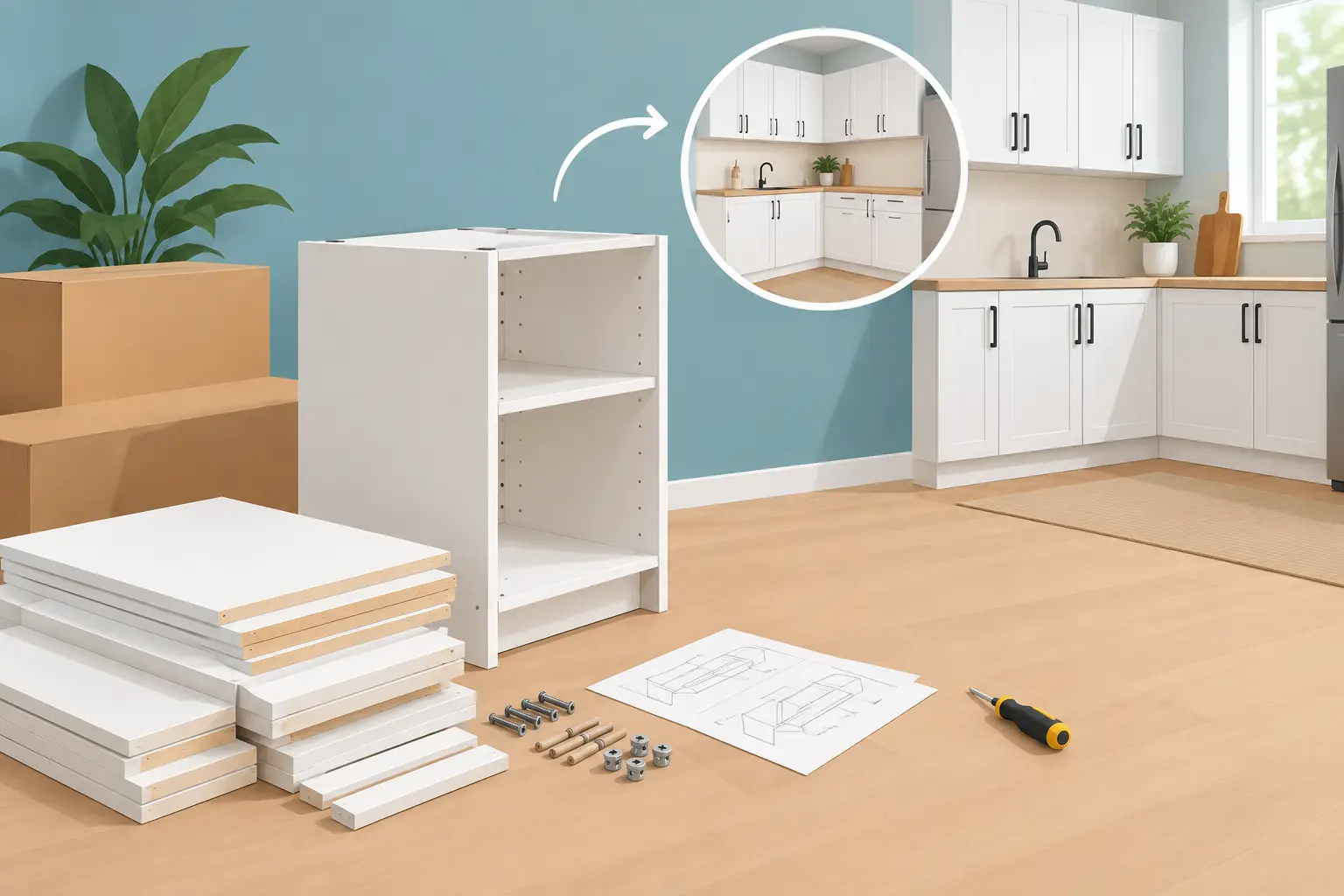
Cabinet boxes are usually plywood or particleboard
The cabinet box is the main structure attached to the wall or floor. It needs to stay square, hold weight, and handle years of opening, closing, and daily use.
Plywood is one of the most common upgrades in cabinet construction. It is made by layering thin sheets of wood together, with the grain running in alternating directions. That layered build gives it good strength and helps it resist warping better than many lower-cost materials. For homeowners who want a cabinet that feels sturdy and holds up well over time, plywood is often a strong choice.
Particleboard is another common cabinet box material, especially in more budget-friendly lines. It is made from wood particles and resin pressed into sheets. It can perform well when manufactured properly and kept dry, but it is generally less resistant to moisture than plywood. In a kitchen where spills, humidity, and plumbing issues can happen, that trade-off matters.
For many Tampa Bay homeowners, moisture resistance is not a small detail. Kitchens see steam, splashes, and changing indoor humidity, so the cabinet box material deserves real attention.
Solid wood is popular, but not everywhere
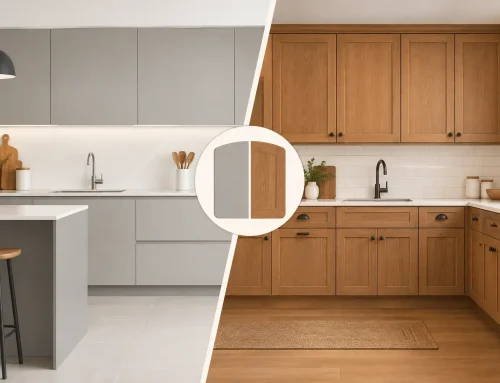
When people imagine high-quality cabinets, they often picture solid wood. Solid wood is used often for cabinet doors, drawer fronts, and face frames. It offers a classic look, natural grain, and the kind of warmth many homeowners want in a kitchen.
Common wood species include maple, oak, birch, cherry, and hickory. Each has a different grain pattern, hardness, and price point. Maple is a favorite for painted and stained finishes because it is smooth and durable. Oak has a more visible grain and a traditional look. Cherry tends to feel richer and more furniture-like, while birch can offer a good balance of appearance and value.
But solid wood is not automatically the best material for every cabinet part. It expands and contracts with humidity changes, which is simply the nature of real wood. That movement is one reason many manufacturers use engineered materials for center panels or cabinet boxes, even in very attractive kitchens.
MDF is common in painted cabinet doors
MDF stands for medium-density fiberboard. It is made from fine wood fibers and resin compressed into dense, smooth panels. MDF is widely used for painted cabinet doors because it has a very even surface and does not have a visible grain pattern.
That smoothness makes it a practical option if you want a clean painted finish, especially in styles like Shaker cabinets. MDF is also less likely than solid wood to show small surface cracks in painted finishes caused by natural wood movement.
The trade-off is that MDF is heavier than some alternatives, and if it is exposed to significant moisture over time, it can swell or deteriorate. Good manufacturing, proper sealing, and normal kitchen care make a big difference here. MDF is not a bad material. It is just a material with a specific best use.
Wood veneer gives the look of real wood
Wood veneer is a thin slice of real wood applied over a core material such as plywood or MDF. This allows manufacturers to create the appearance of solid wood while improving consistency and sometimes controlling cost.
A good veneer cabinet can look beautiful. For many homeowners, there is no practical downside if the cabinet is well made. Veneer also allows a clean, uniform grain match across large surfaces.
The key is quality. A poorly made veneer cabinet may be more prone to edge wear or chipping over time, while a better-built product can provide a durable and attractive finish for years.
Thermofoil and laminate are different from wood finishes
Some kitchen cabinets are made with MDF doors wrapped in thermofoil, which is a vinyl material heat-bonded to the surface. Others use laminate, a synthetic finish layer bonded to a substrate.
These options can be affordable, easy to clean, and visually consistent. They are often chosen for contemporary kitchens or value-focused remodels. At the same time, they do not age the same way as painted wood or stained wood. If a thermofoil surface peels or a laminate edge gets damaged, repairs may be more noticeable.
This does not mean they should be avoided. It means the best choice depends on your budget, style goals, and how long you plan to stay in the home.
What is kitchen cabinets made of when quality really matters?
When homeowners are comparing cabinet quality, the better question is not just what is kitchen cabinets made of. It is how those materials are used together.
A well-built cabinet usually combines good materials with solid construction details. That includes things like sturdy box thickness, reliable joinery, quality drawer glides, soft-close hardware, and a finish that can handle real kitchen use. A plywood box with weak hardware is not automatically better than every other option. Likewise, a cabinet with engineered materials can still perform very well if the construction is strong and the product is designed for long-term use.
This is where shopping in person and asking direct questions helps. Homeowners should know what the box is made from, what the doors are made from, whether shelves are adjustable, how drawers are built, and what kind of finish protection is included.
The best cabinet material depends on your priorities
If your top priority is long-term durability, plywood cabinet boxes and solid wood or high-quality MDF doors are often a smart combination. If you want the best painted finish, MDF doors may actually make more sense than solid wood. If affordability is driving the project, particleboard or laminate cabinets may help you stay on budget while still improving the space.
That is why cabinet shopping can feel confusing at first. Two options may have a similar style and very different price tags, and the reason often comes down to what is beneath the finish.
For a rental property, starter home, or quick refresh before resale, a value-focused cabinet line may be the right move. For a long-term family kitchen, investing in better box construction and stronger materials often pays off in day-to-day use.
How to tell if a cabinet is built well
Material labels matter, but they are only part of the picture. Open the cabinet. Feel the weight of the door. Look at the interior finish. Check whether the drawers feel smooth and solid. Ask whether the back panel is full thickness or thin and stapled on. Look at shelf thickness and the quality of the hinges.
You should also ask practical questions about your household. Do you cook often? Do you have kids who slam drawers? Is this a busy family kitchen, a vacation condo, or a bathroom vanity that sees lighter use? The right answer changes with the space.
At The Cabinets Store, this is where design guidance really helps. Homeowners do not just need color samples. They need someone to explain which materials make sense for their budget, layout, and daily routine.
Don’t choose cabinets by the finish alone
A beautiful door style can pull you in fast, but cabinet material is what determines how that kitchen will live over time. Painted white cabinets may look nearly identical from across the room, whether they are built with plywood, particleboard, solid wood, or MDF. The difference shows up later in durability, maintenance, and overall value.
That is why asking what kitchen cabinets are made of is the right question. Not because one material is perfect, but because every cabinet choice involves trade-offs. The best kitchen is not the one with the most expensive materials on paper. It is the one built with the right materials for your home, your goals, and the way you actually use the space.
Before you make a final decision, take a little extra time to look past the door style and ask what is underneath. That is usually where the smartest cabinet choice begins.