
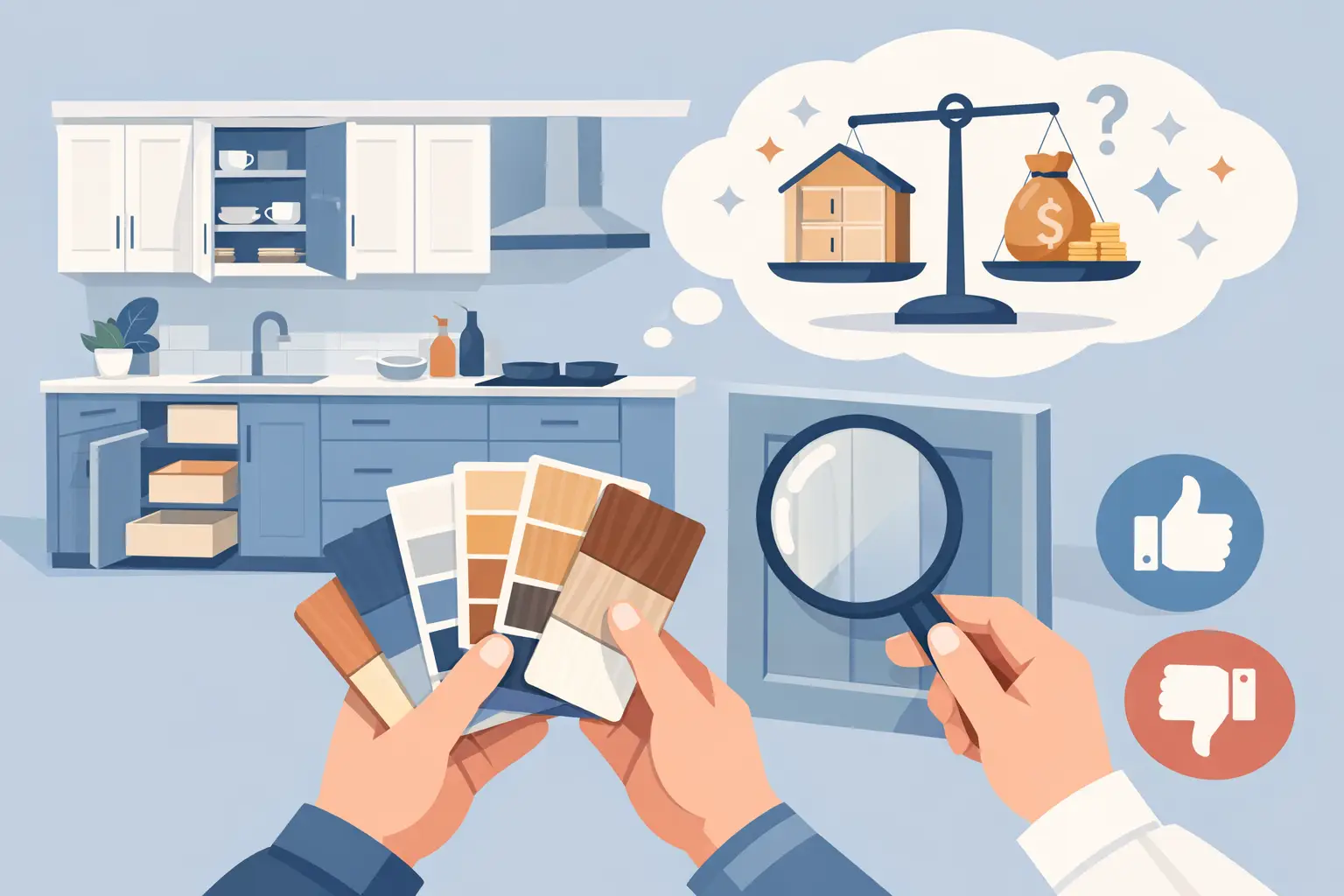
A semi custom cabinets review should answer more than whether the doors look good in a showroom. For most Tampa Bay homeowners, the real question is whether semi-custom cabinetry gives you the layout, storage, and finish you want without pushing the project into full custom pricing. Often, it does. But the best choice depends on your room, timeline, budget, and how much flexibility your plan truly requires.
Semi-custom cabinets sit between stock cabinets and fully custom cabinetry. They are built from a manufacturer’s established cabinet line, then adjusted through available options such as sizes, finishes, door styles, storage accessories, and trim details. That combination can make a kitchen or bathroom feel designed specifically for your home while keeping costs more manageable than a cabinet shop building every box from scratch.
Semi Custom Cabinets Review: What You Are Paying For
With stock cabinets, you generally choose from a limited set of standard widths, colors, and configurations. They can be a practical fit for a straightforward replacement project, especially when timing and price are the top priorities. The trade-off is that standard sizing can leave gaps, require filler panels, or limit the way you use an awkward corner or narrow wall.
Full custom cabinets offer nearly unlimited control. A cabinet can be made to fit a particular inch, match a unique architectural detail, or solve an unusual storage problem. That level of personalization has value, but it also involves more labor, a longer production process, and a higher price.
Semi-custom cabinetry offers a middle path. You may be able to modify cabinet depths, select specialty sizes, choose from a broader finish palette, add decorative end panels, and include practical upgrades such as pull-out trays or drawer organizers. The exact options vary by cabinet line, so it is worth reviewing the specifications rather than assuming every semi-custom brand offers the same flexibility.
For many kitchen remodels, the money goes toward the details homeowners notice every day: drawers that hold heavy cookware, a pantry that organizes groceries, cabinets that reach the ceiling, and a finish that works with the countertop and flooring. Semi-custom can put those features within reach without paying for customization where it does not add meaningful value.
Where Semi-Custom Cabinets Deliver the Most Value
Semi-custom cabinets tend to make the strongest case when a room is mostly standard but not perfectly simple. A typical kitchen may have an off-center window, a refrigerator wall that needs careful spacing, or a corner that would benefit from a better storage solution. In these cases, a few dimensional adjustments and smart accessories can make a substantial difference.
They are also a good fit when visual consistency matters. Homeowners often want a specific door profile, painted color, wood tone, or level of detail around an island. Semi-custom lines commonly provide more choice than entry-level stock selections, making it easier to build a finished look that feels intentional rather than pieced together.
Bathrooms are another strong use case. Vanities need to work around plumbing, wall space, mirrors, and daily storage needs. Semi-custom options can help you avoid settling for a vanity that is too shallow, too wide, or short on drawers. If you are remodeling a primary bath, that extra flexibility can improve how the room functions every morning.
Still, semi-custom is not automatically the best answer. If your home has dramatically uneven walls, historic details, a highly unusual layout, or a cabinet requirement that falls outside a manufacturer’s modification limits, full custom may be more practical. A well-designed plan should fit the room instead of forcing the room to fit a catalog.
Quality Depends on Construction, Not the Label
The term “semi-custom” describes the ordering process and available options. It does not guarantee a particular level of construction. One semi-custom line may include plywood cabinet boxes, dovetail drawer boxes, soft-close hardware, and durable factory finishes. Another may offer more limited materials and hardware at a lower price point.
When comparing cabinet quotes, look beyond door style and color. Ask about the cabinet box material, drawer construction, shelving thickness, hinge and glide quality, and how the finish is applied. These details affect how cabinets hold up under the humidity, daily use, and cleaning demands of a Florida home.
A few construction choices deserve close attention. Plywood boxes are often valued for strength and moisture resistance, while furniture-board construction can still be a good value when it is well made and properly installed. Full-extension drawers let you reach items at the back, and soft-close hinges and glides reduce wear from repeated slamming. Neither feature makes a cabinet right for every budget, but both can improve everyday use.
The finish deserves the same level of scrutiny. Painted cabinets remain popular, especially in white, warm neutrals, and soft greens. They offer a clean, tailored look, though paint can show wear at high-contact edges over time. Stained wood brings natural variation and can be more forgiving in some busy areas. The best choice is not simply what is trending. It is what suits your home, maintenance expectations, and overall design.
Cabinet Design Can Prevent Expensive Changes Later
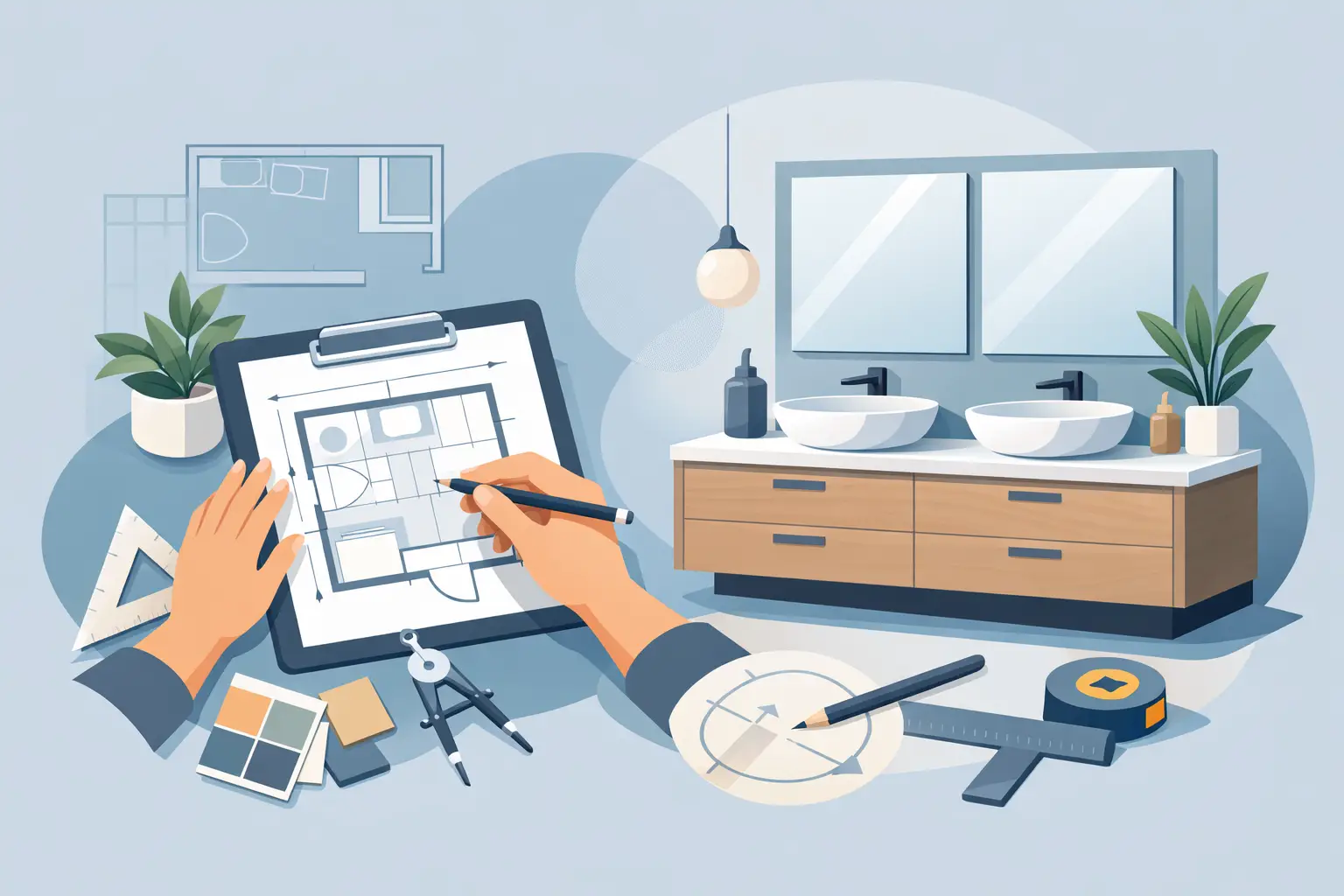
Cabinet selection is closely tied to layout planning. A beautiful cabinet line cannot fix a kitchen with too little landing space near the range, a dishwasher that blocks a walkway, or drawers that cannot open when the island seating is occupied.
This is where design support matters. Before placing an order, confirm appliance specifications, ceiling height, plumbing locations, and the condition of surrounding walls and floors. Decisions about countertops, backsplashes, flooring, and lighting should be considered early because each one affects clearances and finish choices.
At The Cabinets Store, homeowners can work through those decisions with cabinet selection, design guidance, and renovation coordination in one place. That can be especially helpful when a project involves more than replacing boxes and doors, such as moving appliances, updating flooring, or installing new countertops.
The Trade-Offs to Consider Before Ordering
Semi-custom cabinets are not as fast as buying in-stock cabinets from a shelf. Because they are ordered to your selected specifications, lead times are usually longer. A project also needs a more complete plan before the order is released, since changes after production begins can be costly or impossible.
Price can vary widely as well. A basic semi-custom kitchen may be close to premium stock pricing, while a design with tall cabinets, specialty inserts, upgraded finishes, glass doors, and extensive decorative molding can move much closer to custom territory. The product category alone does not establish the final investment.
There are also limits to modification. You may be able to order a cabinet in several widths or request a reduced depth, but not every dimension can be changed. If a sales quote says “semi-custom,” ask which changes are included, which carry an upcharge, and which are not available at all.
To make a fair comparison, bring the same layout and wish list to each cabinet option. Include features such as a trash pull-out, pantry storage, roll-out shelves, drawer bases, finished end panels, and crown molding. Comparing a bare cabinet quote to a fully featured one can make one option appear less expensive when it is simply less complete.
Who Should Choose Semi-Custom Cabinets?
Semi-custom cabinets are often right for homeowners who want more than a basic replacement but do not need every cabinet built from the ground up. They work particularly well for a kitchen refresh with a few layout improvements, a bathroom remodel that needs better storage, or a full renovation where the design calls for a specific look at a controlled price point.
They may be less suitable for a very tight deadline, a temporary rental update, or a space with structural conditions that demand fully made-to-measure cabinetry. In those situations, stock or custom may be the clearer choice.
The most useful question is not, “Are semi-custom cabinets good?” It is, “Which options solve the problems in my room, and which upgrades will I use every day?” A thoughtful cabinet plan turns that answer into a kitchen or bath that feels right long after the remodel dust is gone.








Leave A Comment
You must be logged in to post a comment.